.
.
.
The Swilt Details
Some links may be temporarily unavailable or the company may not have all social media/retail presences.
Shark Tank Episode Details
The Shark Tank Pitch
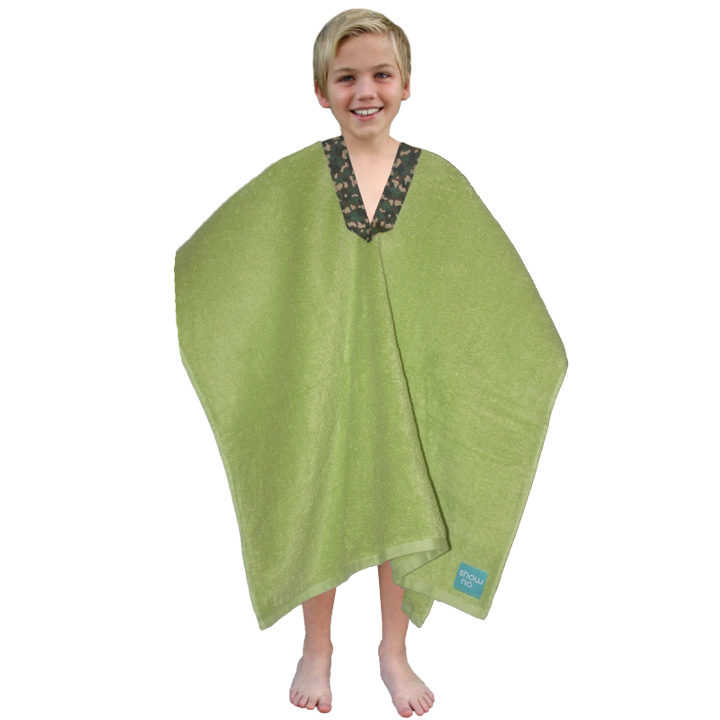
Ivori Tennelle arrived in the Tank in episode 304 with a product that occupied its own intersection in the apparel market: The Swilt, a hybrid garment combining a hooded sweatshirt's structure and mobility with a blanket's coverage and warmth. The name was a portmanteau of sweatshirt and quilt, and the concept had a clearly identified target user: the outdoor sports parent.
Anyone who has spent a full Saturday at a youth soccer tournament or stood on a cold February evening watching a middle school baseball practice understands the specific discomfort Tennelle was addressing. Bleacher seating offers no insulation, sideline standing offers no windbreak, and regular outerwear is rarely engineered for the combination of inactivity and outdoor exposure that spectator parenting demands.
The Swilt wrapped around the wearer like a blanket while maintaining the fitted hood and functional sleeves of a sweatshirt, allowing the kind of arm movement necessary for enthusiastic cheering while maintaining full coverage across the torso and lap. Tennelle sought $30,000 for 35% equity, pricing the company at roughly $85,000 – an early-stage valuation reflecting that The Swilt was a product-stage business seeking investment to scale production and build distribution.
The pitch drew an immediate comparison challenge: the Snuggie and its competitors had already established a wearable blanket category in the consumer market, and the Sharks pressed Tennelle to articulate what differentiated The Swilt from those already-available products at price points established by mature brands. The sports-parent specificity was the clearest differentiator – The Swilt was designed not for couch use but for outdoor mobility – but translating that distinction into a retail proposition that would justify shelf space alongside more generalist wearable blankets proved difficult to argue convincingly.
The Sharks passed unanimously, each citing concerns about market differentiation, category competition, and the challenge of reaching a relatively specific target consumer without retail infrastructure.
Where Are They Now?
The Swilt's journey from Tank rejection to market proved to be a short one, as the combination garment faced fundamental commercial headwinds that the Shark Tank exposure alone could not overcome. The core challenge was differentiation: wearable blanket products had already established a consumer category with the Snuggie and similar products, and convincing retailers and consumers that The Swilt offered sufficiently distinct value to justify a dedicated purchasing decision proved difficult.
The sports-parent angle, while emotionally resonant, represented a relatively narrow and seasonal target audience – a subset of a subset, requiring significant marketing investment to convert awareness into sales at the volume necessary for sustainable operations. Manufacturing a garment in multiple sizes, with the structural elements that distinguished it from simpler wearable blankets, added complexity and cost that further complicated the economics.
Tennelle faced the challenge that many apparel entrepreneurs encounter: the gap between a product that clearly solves a problem in its target context and one that achieves sufficient commercial scale to sustain a standalone business. Without a retail partnership providing distribution and marketing infrastructure, building consumer awareness for a specialized product category proved to be an insurmountable challenge on the available budget.
The company did not survive long past the Shark Tank appearance, with operations ceasing as the business failed to generate the sustained sales volume necessary to fund continued production and marketing. Tennelle's experience illustrates the structural difficulty facing specialty apparel products occupying a niche between general-purpose clothing and highly technical performance gear – a challenging market segment that requires either significant retail muscle or a hyper-dedicated direct-to-consumer community to sustain.
Revenue
N/A