.
.
.
Beat Box Beverages Details
Some links may be temporarily unavailable or the company may not have all social media/retail presences.
Shark Tank Episode Details
The Shark Tank Pitch
College friends Justin Fenchel, Brad Schulz, and Aimey Steadman appeared on Shark Tank Season 6 seeking $200,000 for 10% equity in BeatBox Beverages, valuing their innovative ready-to-drink cocktail company at $2 million. The five co-founders - Justin, Brad, Aimey, Zachary Sears, and Matthew Schulz - all met while studying at the McCombs School of Business at the University of Texas in Austin, and the origin of BeatBox was fundamentally a business school assignment that got away from them.
Justin's central insight was deceptively simple: when people showed up to house parties, tailgates, and outdoor events, they brought either 30-rack cases of beer or sagging boxes of cheap wine, because those were the only truly portable alcohol formats available in large volumes. Nobody was bringing a mixed drink experience to the party, because nothing that delivered that experience existed in a form that was practical to carry, chill, and serve outdoors.
His solution was party-sized Tetra Pak boxes of pre-mixed cocktails made from a base of orange wine - a category technical enough to navigate the distribution complexities of alcohol licensing - with flavors designed to taste like the kinds of drinks people actually ordered at bars. The lineup included Blue Razzberry Lemonade, Cranberry Limeade, Box A'Rita, and Texas Tea (the last exclusively available in their home state due to licensing), each delivering 11.1% alcohol by volume at approximately 40 calories per serving, in a 5-liter format containing the equivalent of more than 30 servings.
The retail price of $19.99 per box made the cost per drink genuinely competitive with any other portable alcohol format on the market. Each box cost around $4 to produce, creating a unit economics story that should have been attractive to investors even at their early stage.
The founders had started the business with $55,000 in personal funds and accumulated $100,000 in debt in the process of getting to market - an earlier IndieGoGo campaign in early 2013 had raised only $6,000 toward a $10,000 goal, so they hadn't been able to rely on crowdfunding. By the time of their Shark Tank filming, the company was generating revenue exclusively in Texas because alcohol distribution licensing required state-by-state approval, a regulatory reality that was both a constraint and an explanation for why their $245,000 in 14-month revenue was concentrated in a single market with far more growth potential than the numbers alone suggested.
Where Are They Now?
The presentation in the tank was energetic and enthusiastic in the way only a team of business school friends pitching their party beverage could be - but most of the sharks were unmoved. Kevin O'Leary tasted the product and made no effort to conceal his distaste, declaring the beverage undrinkable and lecturing the founders on the brutal economics of the beverage distribution business, where shelf space was earned through years of relationship-building and national expansion required capital that dwarfed anything they were asking for.
He went out. Lori Greiner, Robert Herjavec, and Daymond John each found separate reasons to pass, ranging from concerns about the product's positioning to doubts about the team's ability to navigate the complex three-tier alcohol distribution system at a national scale.
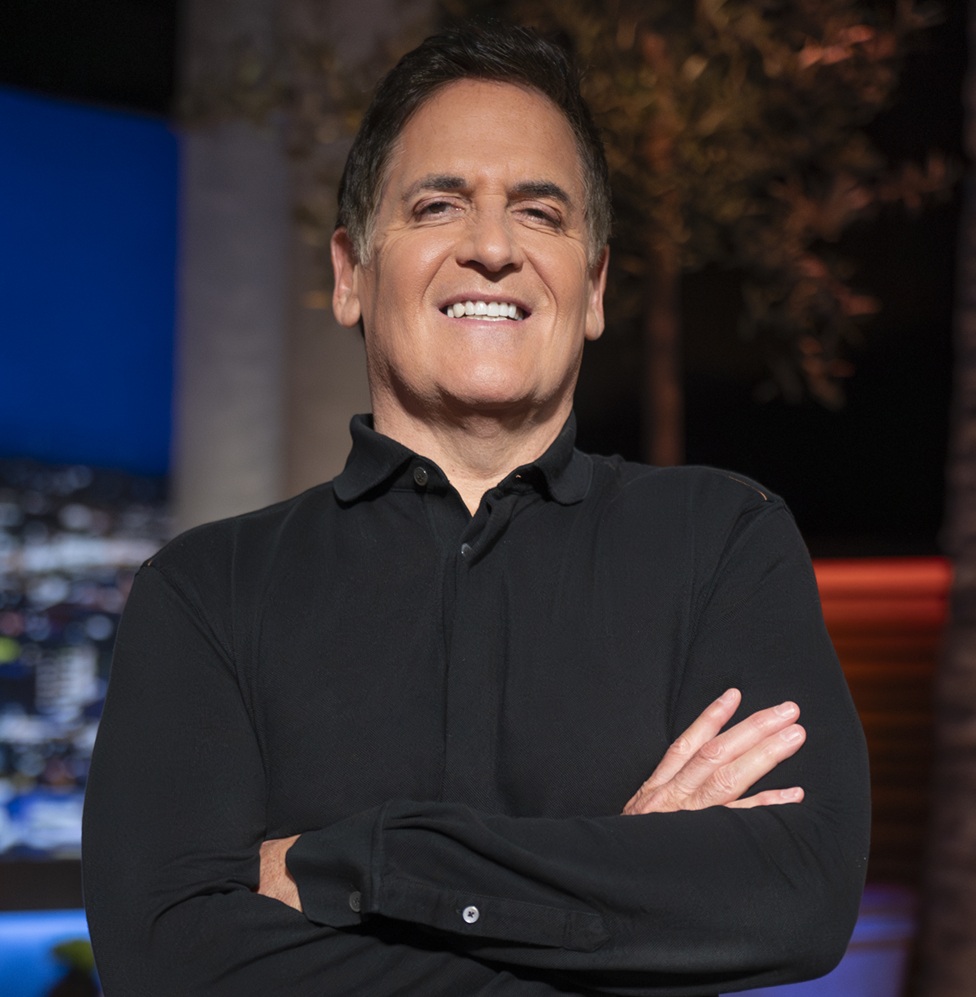
Mark Cuban sat through the entire presentation differently. Where the others saw a beverage company with a distribution problem, Cuban saw a brand with genuine cultural identity - BeatBox lived at the intersection of music, festivals, and outdoor social culture in a way that few consumer products authentically inhabited.
He made an unconventional offer: rather than meeting the founders' ask of $200,000 for 10%, he offered $600,000 for 33%, arguing that they needed substantially more capital than they were requesting to actually break out of Texas. The founders countered at $1,000,000 for 33%, and in a moment that surprised the room, Cuban accepted.
The deal closed, and what followed was one of the more remarkable growth trajectories in Shark Tank's investment history. The first months were explosive - $750,000 in sales within weeks of the episode airing - but the two years after that were a grind, with the company landing in 400 Walmart stores and failing to achieve the velocity needed to hold that placement.
Rather than collapse, the team pivoted hard into single-serve packaging, which unlocked a new class of retail and hospitality accounts. That shift doubled sales from $1 million to $2 million, then to $4 million in 2019, and the growth continued accelerating through product line expansion into Corkless canned wine, Brizzy seltzer cocktails, and additional formats under the umbrella of their rebranded parent company, Future Proof Brands LLC.
By 2023, BeatBox was reporting over $100 million in annual revenue with a $200 million company valuation - a result that Cuban himself highlighted during the Season 15 premiere as one of his most successful Shark Tank investments. In February 2026, Anheuser-Busch completed its acquisition of an 85% majority stake in BeatBox.
Anheuser-Busch InBev's subsequent SEC filing reported a total purchase price of $493 million, while the official announcement described a path to 100% ownership after five years based on a predetermined pricing formula. BeatBox joined Anheuser-Busch's Beyond Beer portfolio and continued operating under the BeatBox brand.
The transaction firmly established BeatBox as one of Shark Tank's most significant business outcomes, although Mark Cuban's personal proceeds were not publicly disclosed and cannot be reliably calculated from the original on-air equity percentage.
Revenue
$100 million
Latest Coverage