
Somewhere on your phone right now, there's an idea. Maybe it's in your Notes app, buried under a grocery list and a screenshot of directions from six months ago. Maybe it's a text thread you started with a friend — hear me out... — and then nothing. Maybe it's been living rent-free in your head for two years, showing up every time you run into the exact problem it would solve.
You are not alone. According to a 2022 Harris Poll survey conducted on behalf of Zapier, 40% of Americans currently have a side hustle — up from 34% just two years earlier. On average, those people earn $12,689 per year from it. And nearly half of them (44%) spend fewer than 10 hours a week doing it. The gap between "idea in your notes" and "real income" is smaller than most people think. The difference isn't the quality of the idea. It's what people do — and don't do — after the idea arrives.
The Side Hustle Numbers Are More Encouraging Than You Think
Before we get to the founder stories, let's set the actual stakes. The same Zapier data found that 38% of side hustlers started theirs because they wanted to do something they enjoyed — not just for money. And 16% started specifically to test a business idea. That last number matters: one in six people already treating their side hustle as a startup experiment.
Millennials and Gen Z are leading the charge — 59–61% of adults under 42 report having a side hustle, compared to 22% of Boomers. But the income opportunity exists at every age. The point isn't that everyone should build the next Shark Tank company. The point is that more people are taking a real first step than you'd expect — and the ones who treat it seriously tend to find that the path reveals itself pretty quickly once they start walking.
She Made Lipstick in Her Kitchen While Working on Wall Street
Melissa Butler was working in finance in New York City when she noticed that the beauty industry looked nothing like her. The lipstick shades on the shelves were safe, predictable, and overwhelmingly designed for one type of customer. She started mixing her own formulas in her apartment kitchen — bold colors, unconventional names — and eventually launched The Lip Bar as a side project while keeping her finance job.
When she and co-founder Rosco Spears appeared on Shark Tank Season 6, the Sharks weren't kind. Barbara Corcoran called the products "clown makeup." Kevin O'Leary said it was a "train wreck." Every Shark passed. Melissa walked out of the tank without a deal — and kept going anyway. By the time she was telling that story to the press a few years later, The Lip Bar had launched in over 1,000 Target stores nationwide and was generating more than $5.5 million in revenue. She didn't start in a lab or a storefront. She started in her kitchen, after work.
Outside Shark Tank: The Woman Who Cut the Feet Off Her Pantyhose
In 1998, Sara Blakely was 27 years old, selling fax machines door-to-door, and getting ready for a party. She wanted to wear white pants but didn't love what traditional underwear looked like underneath them. So she cut the feet off her pantyhose and wore those instead. The idea worked. She spent the next two years researching the hosiery industry on nights and weekends, wrote her own patent application to save money, and sewed samples herself. She never quit her day job until she had to.
That was the origin of Spanx. Sara bootstrapped the company without a single dollar of outside investment and eventually became the world's youngest female self-made billionaire. No pitch deck. No co-founder. No VC. Just a personal problem she solved for herself and then realized millions of other women had too. The idea lived in her head for two years before it became a company — but she didn't let it live there forever.
A Lawyer and an Orthodontist Couldn't Find Good Ugly Sweaters
In 2011, Evan Mendelsohn was practicing law. Nick Morton was an orthodontist. Neither had any background in fashion or e-commerce. But both of them were frustrated by the same problem every December: the ugly Christmas sweater market was full of either cheap, scratchy garbage or outrageously expensive vintage pieces. They figured there had to be a better middle ground, built a simple website, and started selling ironic holiday sweaters as a side project — neither of them quitting their day jobs.
Tipsy Elves grew faster than either of them expected. By the time they walked into the Shark Tank Season 5 tank, they had $900,000 in sales and were projecting $5 million for the coming holiday season. Robert Herjavec invested $100,000 for 10% equity. The company grew into a full lifestyle brand with revenue that has crossed $8 million annually. A lawyer and an orthodontist. A seasonal side project. No fashion experience required.
Outside Shark Tank: A Blog About Beauty Became a $1.8 Billion Company
Emily Weiss was an intern at Vogue when she started a beauty blog called Into the Gloss in 2010. She had no budget, no business plan, and no idea it would become anything more than a creative outlet alongside her job. The blog became a destination — real conversations about real products, not airbrushed magazine coverage — and grew to 2 million monthly readers. In 2014, Emily launched Glossier, a beauty brand that grew directly out of the community she'd built on the blog. By 2019, Glossier had crossed a $1.2 billion valuation — unicorn status built on a blog — and was one of the most talked-about brands in beauty.
The blog was the side hustle. The community was the product validation. The business followed both. Emily didn't need to quit her job to write a blog on evenings and weekends. She just had to keep showing up — and when the audience was real enough to build something for, she did.
Three College Students Found Their Idea on Vacation
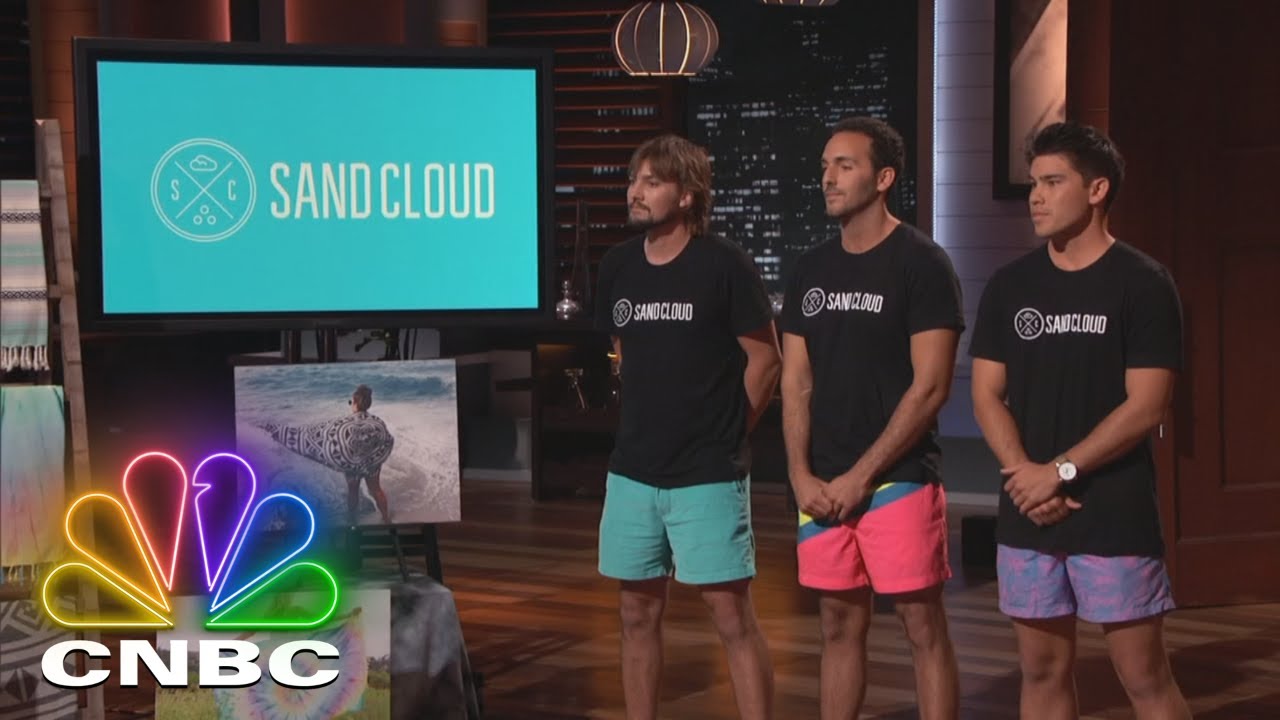
San Diego State University students Steven Ford, Brandon Leibel, and Bruno Aschidamini were on a trip to Thailand when they discovered Turkish beach towels — lightweight, fast-drying, multi-use, and unlike anything they'd seen in American stores. They came home with a simple hypothesis: American beach-goers would love these. They started importing towels, selling them on Instagram, and donating a portion of each sale to marine conservation, building Sand Cloud as a side project while still in school.
By the time they appeared on Shark Tank Season 8, Sand Cloud had already built a passionate Instagram following and was generating real revenue. Mark Cuban invested $200,000 for 15% equity. Revenue grew to $7 million and beyond. Three broke college students. A beach vacation. And Instagram. They didn't wait to graduate. They didn't wait for a business degree. They started selling something they genuinely believed in, from wherever they were.
Outside Shark Tank: Four MBA Students and a Spreadsheet
In 2009, four Wharton MBA students were frustrated by the eyeglass industry — glasses cost $500 or more at retail, but the frame itself was worth a fraction of that. Neil Blumenthal, Dave Gilboa, Andy Hunt, and Jeff Raider built a spreadsheet model, launched a website with a try-at-home program, and began selling glasses online as a class project. They called it Warby Parker.
They didn't leave school first. They didn't raise money first. They built the thing first. Their website sold out the entire first year's inventory in 48 hours. Warby Parker went on to IPO in 2021 at a $6 billion valuation. The famous origin isn't "four entrepreneurs quit everything to chase a dream." It's "four students did it in between classes."
The Kid Who Sold Pancake Mix from a Red Wagon
Joel Clark was eight years old when he first sold his family's whole-grain pancake mix door to door from a red wagon in his Utah neighborhood. That's the actual origin story of Kodiak Cakes, which was eventually acquired by private equity firm L Catterton in 2021 at a valuation of approximately $200 million. The family recipe dated back to 1982. The business itself was kept alive for decades by Clark family members working other jobs and treating Kodiak as a side operation.
By the time Joel and co-founder Cameron Smith pitched on Shark Tank Season 5, Kodiak Cakes had $2.5 million in annual sales and was already in Target nationwide. Every Shark passed. Kevin O'Leary and Robert Herjavec offered $500,000 for 50% — a valuation Joel and Cameron found far too low. They walked out without a deal and kept building. The point of the Kodiak story isn't that a kid built a company. It's that an idea doesn't need to be fully formed or fully funded to survive. It just needs someone who refuses to let it die.
What Side Hustles Actually Work? The Proven Models
Not every side hustle turns into a Shark Tank pitch. Most don't. But the ones that generate consistent income tend to fall into a handful of proven categories — and understanding them helps you figure out where your own idea actually fits:
- Sell your existing skills as a service. Freelance writing, design, web development, accounting, video editing, coaching. The smallest version of this is one client. Tipsy Elves started with two guys who had skills in law and medicine — not fashion. The skill you already have is almost always more valuable outside your day job than inside it.
- Solve a problem you personally experienced. Spanx, Kodiak Cakes, The Lip Bar, Sand Cloud, Warby Parker — every single one of them started with a founder who ran into a problem and couldn't find a satisfying solution. If you've been frustrated enough to search for a product that doesn't exist yet, you're not the only one.
- Teach what you already know. Online courses, tutoring, workshops, YouTube channels, newsletters. Emily Weiss didn't teach beauty — she curated it. But the model works: if you have knowledge people want, packaging it for sale is faster than ever. Udemy alone has over 84 million learners.
- Resell or curate products. Sand Cloud started by importing and reselling towels they found in Thailand. Reselling vintage items, niche goods, or international products via Amazon, Etsy, or Shopify has turned into serious income for thousands of people who started on weekends.
- Build an audience around a niche you already care about. Emily Weiss didn't know she was building a company when she started her blog. She was sharing something she loved. Glossier grew from the audience. The audience comes first — the business follows when the trust is real.
Your Minimum Viable First Move
If the idea in your notes app is real — a problem you keep running into, a product you've wished existed, a service you'd happily pay for — here is what actually moves the needle:
- Write it in one sentence. Who has the problem? How does your solution fix it? How would you make money? If you can't answer those three questions in plain language, you don't have a business yet — you have a topic. Keep going until you can.
- Talk to five people who have the problem — this week. Not to pitch, to listen. Real interest sounds like: "I've already tried three things and nothing works." Polite interest sounds like: "yeah, that sounds cool." The difference matters enormously.
- Make it exist in some small form this weekend. A landing page, a handmade prototype, an Etsy listing, a one-on-one service offered at a real price to a real person. Sara Blakely cut the feet off her pantyhose. Joel Clark pulled a red wagon. Starting small is the point — not because it's romantic, but because it's the only way to find out if the thing is real.
- Tell someone you're doing it. Send a text: "I'm working on [idea]. Ask me how it's going in a week." That commitment is exponentially harder to ignore than a note to yourself.
- Measure something. One sale. One email sign-up. One conversation that ends with "when can I buy this?" Proof of concept doesn't require perfection. It requires a signal that isn't just your own enthusiasm.
You Don't Need a Shark — Or a Perfect Plan
None of the founders above needed a television show to validate their idea. Shark Tank gave some of them exposure, capital, and mentorship — but the company already existed before the cameras did. Kodiak Cakes had a 32-year family history. The Lip Bar had a growing customer base Melissa had built from her apartment. Tipsy Elves had nearly a million dollars in holiday sales. Sara Blakely had been running Spanx for years before she agreed to her first outside investment. The pitch — whether on television or to an investor — is only possible because the work came first.
Two in five Americans already have a side hustle. The ones who turned theirs into something bigger didn't have a secret advantage. They had a problem they cared about, a willingness to start before it felt ready, and the stubbornness to keep going when the early numbers were small. The notes app is the world's most well-intentioned idea graveyard. The question is what you're going to do with yours.
Sources & Further Reading
- Zapier / Harris Poll: 40% of Americans Have a Side Hustle (2022) — Survey of 2,032 U.S. adults on side hustle income, hours, and motivations.
- Fortune: Sara Blakely's $1 Billion Idea Started With $5,000 in Savings — The full Spanx origin story in Blakely's own words.
- Wharton Magazine: Neil Blumenthal Shares the Warby Parker Story — How four MBA students launched a class project that became a public company.
- Wired UK: How Glossier Turned Itself Into a Billion-Dollar Beauty Brand — The Into the Gloss to Glossier journey.
- Udemy About Page — Current learner and course statistics.