Season 17 of Shark Tank is officially over, and it was unlike any that came before it. Not because of the pitches — though there were plenty of memorable ones — but because of the chair that sat empty. For the first time since Season 2, Mark Cuban was not in the room. After 15 seasons and 263 deals totaling $66 million, the most active investor in Shark Tank history moved on. Season 17 had to answer a question every longtime fan was asking: does the show still work without him?
The short answer, backed by 18 episodes of data: yes, it does. A 75% deal rate — the highest in the show's history — and over a dozen rotating guest sharks kept the Tank busier than ever. The longer answer is more interesting. Here's everything that happened in Season 17, by the numbers.
Season 17 at a Glance
The 75% deal close rate is the highest in the show's 17-season history, continuing a trend we tracked in our analysis of how success rates have evolved since Season 1. For context, the show launched in 2009 with a 42% close rate. Season 17 nearly doubled that.
The Sharks: Who Dealt, Who Sat Back
The single biggest story of Season 17 isn't a company — it's Lori Greiner. With Mark Cuban gone and no obvious heir apparent, Lori stepped into the void and had what may be the most active season of her career. 15 deals. $2.35 million invested. Nobody came close.
Kevin O'Leary was second with 11 deals and the season's highest total dollar amount from a single shark at $2.85 million — driven largely by his preference for larger equity stakes and royalty structures (he had 4 royalty deals this season, more than anyone). Barbara Corcoran rounded out the top three with 9 deals, investing $2.3 million at an average equity stake of 21.7% — the highest of any regular shark.
| Shark | Type | Deals | Total Invested | Avg Equity | Royalty Deals |
|---|---|---|---|---|---|
| Lori Greiner | Regular | 15 | $2,350,000 | 15.3% | 1 |
| Kevin O'Leary | Regular | 11 | $2,850,000 | 11.8% | 4 |
| Barbara Corcoran | Regular | 9 | $2,316,666 | 21.7% | 0 |
| Robert Herjavec | Regular | 6 | $875,000 | 9.4% | 2 |
| Daymond John | Regular | 4 | $475,000 | 18.8% | 0 |
| Kendra Scott | Guest | 5 | $970,000 | 22.4% | 1 |
| Daniel Lubetzky | Guest | 4 | $525,000 | 13.5% | 1 |
| Alexis Ohanian | Guest | 3 | $1,176,000 | 8.5% | 0 |
| Chip & Joanna Gaines | Guest | 3 | $333,333 | 12.5% | 0 |
| Raushan Williams | Guest | 2 | $625,000 | 6.5% | 1 |
| Allison Ellsworth | Guest | 2 | $425,000 | 10.5% | 0 |
| Michael Strahan | Guest | 2 | $225,000 | 8.8% | 1 |
| Rashaun Williams | Guest | 2 | $175,000 | 7.0% | 0 |
| Fawn Weaver | Guest | 1 | $125,000 | 20.0% | 0 |
Note: Multi-shark deals are counted once per shark. Some entries above reflect solo investment within a joint deal.
The Guest Shark Experiment: A Season-Long Audition
With Cuban's chair open, ABC leaned into the guest shark format harder than any previous season. Nine different guest sharks cycled through the Tank across 18 episodes — and collectively, they made 28 deal participations totaling nearly $5.9 million. That's not a token appearance count. That's meaningful deal-making.
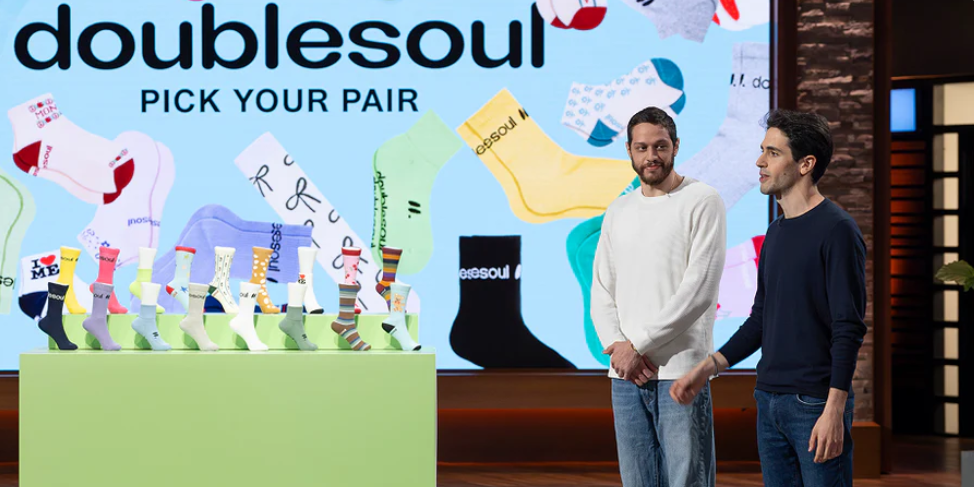
Kendra Scott led all guests with 5 deals and $970,000 invested. Her biggest swing was the season-opener: $500,000 for 10% of Double Soul, the eco-friendly sock brand co-founded with Pete Davidson that had reached $2.3 million in annual revenue. She also invested in Sleepy Baby, Cabana Boys Events, Crowd Compass, and Glimmer Wish.
Alexis Ohanian made only 3 deals but wrote the second-largest check of any guest: $776,000 for RetrievAir, a travel tech company. If Season 17 was an audition for a permanent seat, Ohanian made the strongest financial case. Chip and Joanna Gaines made 3 deals but skewed toward smaller lifestyle and home companies that fit squarely in their brand lane.
The regulars still dominated in raw volume — 45 deal participations vs. 28 for guests — but the gap is closer than any previous guest-heavy season. The Tank is clearly evolving toward a more rotating roster, and Season 18's casting events suggest ABC is doubling down on that strategy.
The Biggest Deals of the Season
The single largest deal of Season 17 went to HiberTec Homes, a sustainable modular housing company that landed $1 million from Barbara Corcoran. In a season where the average deal was $248,000, a seven-figure check stands out — especially in the housing category, which rarely sees that kind of investment on the show.
| Company | Industry | Deal Amount | Shark(s) |
|---|---|---|---|
| HiberTec Homes | Lifestyle/Home | $1,000,000 | Barbara Corcoran |
| 9 Strap | Fitness/Sports | $800,000 | Kevin O'Leary, Raushan Williams, Kendra Scott, Daniel Lubetzky |
| RetrievAir | Travel | $776,000 | Alexis Ohanian |
| Double Soul | Fashion/Beauty | $500,000 | Kendra Scott |
| Crowned Skin | Fashion/Beauty | $500,000 | Raushan Williams |
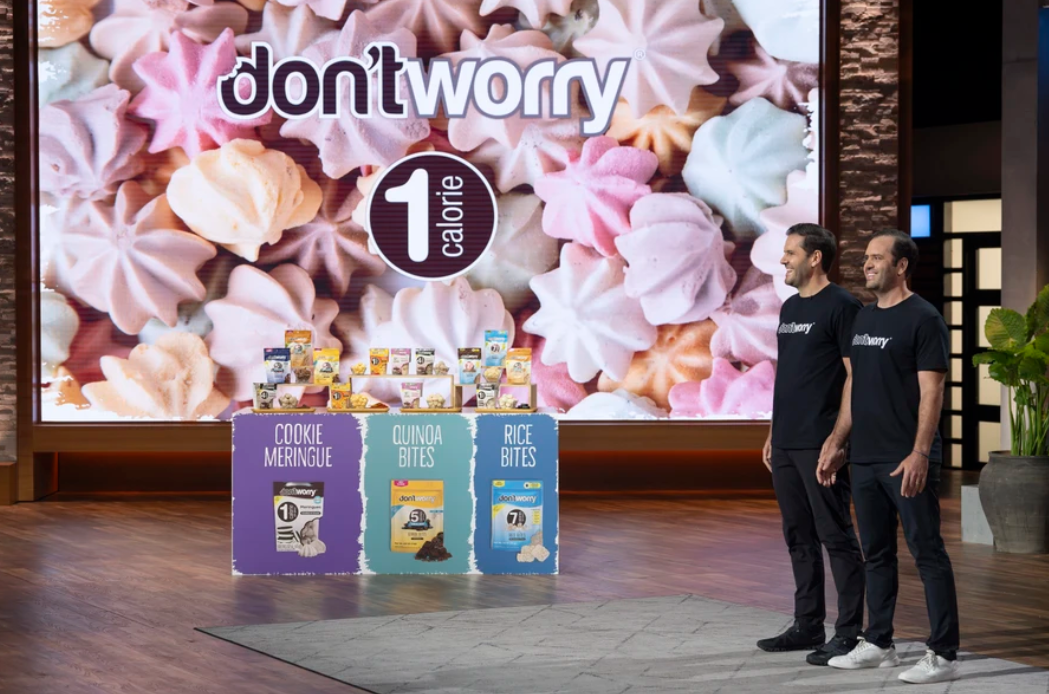
| Don't Worry Snacks | Food & Beverage | $500,000 | Lori Greiner |
| REMplenish | Health/Wellness | $400,000 | Kevin O'Leary, Daniel Lubetzky |
| Nampons | Health/Wellness | $350,000 | Robert Herjavec, Michael Strahan |
| Clean Green Golf Balls | Fitness/Sports | $350,000 | Robert Herjavec, Kevin O'Leary |
| Dad Strength Brewing | Food & Beverage | $300,000 | Lori Greiner, Robert Herjavec, Rashaun Williams |
9 Strap's $800,000 deal was the most chaotic negotiation of the season — four sharks all in, which is rare. The fitness accessory company's multi-shark feeding frenzy was the clearest example of what happens when a product hits the Tank at the right moment with the right metrics.
What Industries Won — and Which Ones Struggled
Technology and Media/Entertainment went a perfect 8-for-8 combined — every pitch in those categories walked out with a deal. Fashion and Beauty wasn't far behind at 88% (7 of 8). Food and Beverage, the season's largest category by volume with 20 companies, had the highest raw deal count (14) but only a 70% close rate — the lowest of any major category.
| Industry | Companies | Deals | Deal Rate |
|---|---|---|---|
| Technology / Software | 5 | 5 | 100% |
| Media / Entertainment | 3 | 3 | 100% |
| Fashion / Beauty | 8 | 7 | 88% |
| Fitness / Sports / Outdoors | 14 | 11 | 79% |
| Health / Wellness | 4 | 3 | 75% |
| Food & Beverage | 20 | 14 | 70% |
| Lifestyle / Home | 12 | 8 | 67% |
| Pet Products | 2 | 1 | 50% |
| Travel | 2 | 1 | 50% |
| Children / Education | 2 | 1 | 50% |
The Food and Beverage split is interesting. The sharks were clearly selective — they funded proven consumer brands like Don't Worry Snacks and Dad Strength Brewing while passing on six others that included concepts like Tantos Chips and Hot Girl Soda. In a crowded category, differentiation mattered more than usual.
The Life Without Cuban Question
Before Season 17 aired, the biggest storyline was whether Shark Tank could survive the departure of its most prolific investor. The early ratings numbers showed the concern was valid — viewership dipped from Season 16's 2.4 million premiere to 1.88 million, a roughly 25% decline. Cuban's farewell episode in Season 16 had drawn 2.91 million viewers, making it one of the most-watched episodes in years.
But viewership and deal quality are different metrics. From a pure deal-making standpoint, Season 17 was active. The 75% close rate means three-quarters of every company that walked through the door left with an investment. The average check size of $248,000 is consistent with recent seasons. And the rotation of high-profile guest sharks kept the panel fresh in a way that a single permanent replacement might not have.
What Cuban's absence did change is the nature of the deals. He was the shark most likely to write a big solo check for a tech company or go head-to-head with another shark to win a deal. Without him, the season skewed toward lifestyle, consumer goods, and food — categories where Lori, Barbara, and the guest sharks are most comfortable. Exactly one technology pitch went undealt all season.
The 18 That Left Empty-Handed
In a season with a 75% deal rate, 18 companies still walked out of the Tank without an investment. Some were valuation mismatches. Some had structural problems the sharks identified quickly. And a few — based on how this show's history tends to play out — may be the ones worth watching most closely over the next few years.
As we covered in our piece on Shark Tank rejections that became success stories, the no-deal list is not a death sentence. Ring, Kodiak Cakes, and Coffee Meets Bagel all left the Tank without a deal. The 18 Season 17 rejections — including Pelagion, LiquidView Windows, Hot Girl Soda, and PowerSoul Cafe — represent open questions that won't be answered for another year or two.
The full no-deal list from Season 17: Pelagion, QB54, Pluck, The Sprouting Company, Lila Birth Gowns, Tantos Chips, FlightPath Golf Tees, LiquidView Windows, The Yes Girls, BoxBlayde, Cranel, Paco & Pepper, Hot Girl Soda, GOB Earplugs, Everything Blocks, Hundy, PowerSoul Cafe, Packd.
Kevin O'Leary's Royalty Obsession
One of the most consistent patterns of Season 17 was Kevin O'Leary doubling down on royalty deals. He structured 4 of his 11 deals with royalty components — the most of any shark this season. As we analyzed in our breakdown of O'Leary's royalty strategy, this structure gives him downside protection and a predictable cash return regardless of equity dilution. It's not always popular with founders, but he keeps using it because it keeps working.
Looking Ahead: What Season 17 Sets Up
Season 18 casting events are already underway, with open calls held in Las Vegas, Cabazon, and Philadelphia. ABC hasn't announced whether the rotating guest shark format continues or whether they'll name a permanent replacement for Cuban's seat. But Season 17 laid out a clear case: the guest shark model works. Kendra Scott, Alexis Ohanian, and Daniel Lubetzky all made real investments in real companies. They weren't there for the cameras.
The show turns 17 seasons old with its highest deal close rate ever, a new generation of companies that reflect where consumer spending is heading, and a panel that proved it can function — and deal — without its most iconic member. That's not a bad position for a show people wrote off when Cuban announced his departure.
Season 18 has a lot to live up to. Based on what Season 17 produced, it might just manage it.