Most people watch Shark Tank like it is the finish line. Founder walks in, lands a deal, shakes hands, and the story is over. In reality, the show is often just a signal event. The real game starts after the cameras stop rolling.
When you look across our Shark Tank company data, a clear pattern shows up: some of the smartest founders did not rely on the TV deal at all. They used the exposure to prove demand, then found capital that fit their business better, whether that meant an accelerator, community crowdfunding, a venture round, or simply enough traction to attract stronger partners later.
For this article, we combined our internal company dataset with current public web research from live company sites and verified campaign pages. That matters, because it lets us compare what looked promising on TV with what the businesses actually became.
The Short Version
| Company | What Happened On Shark Tank | What Came Next |
|---|---|---|
| Notehall | Passed on Barbara Corcoran's investment after filming | Joined DreamIT Ventures, scaled nationally, then sold to Chegg |
| Swimply | All five sharks passed | Later raised major venture capital and grew into a much broader marketplace |
| Cabinet Health | TV deal was not the final story | Used Republic crowdfunding and retail expansion to keep scaling |
| Golfkicks | Mark Cuban deal did not fully define the outcome | Added seed money, Republic crowdfunding, and strong niche-market traction |
| Proven Skincare | All sharks passed | Kept scaling personalized skincare and later raised a large Series A |
| Neuro Gum | Turned down shark offers | Raised venture money and built mainstream retail distribution |
1. Notehall Chose Better Capital, Not Faster Capital
Notehall is one of the cleanest examples of why founders should not confuse a televised deal with the best strategic option. On paper, Barbara Corcoran's interest looked like a breakthrough. Off camera, the founders decided that a stronger operating platform mattered more than a quick check.
According to our dataset, Notehall passed on the post-show investment path and joined DreamIT Ventures instead. That move gave the team mentorship, investor access, and a startup environment built for scale rather than a one-off angel relationship. The result was not subtle: Notehall expanded to 54 institutions, reached roughly 750,000 users, and became attractive enough for Chegg to acquire it.
That is the first big lesson in this whole category. Better capital is not always the largest number in the room. Sometimes it is the capital structure that helps a company become acquirable.
2. Swimply Turned a No-Deal Into Venture-Scale Growth
When Swimply pitched, the sharks saw an odd idea with liability questions and limited traction. The business looked like an overvalued niche marketplace. Then the world changed, consumer behavior changed, and Swimply suddenly looked early instead of unrealistic.
Our internal data shows the company later raised $10 million in venture capital in May 2021 and followed it with a $40 million round later that same year. That alone would make Swimply a perfect fit for this article. But the current website makes the bigger point even clearer: Swimply now says it has hosted more than 4 million experiences, works with over 15,000 hosts, and operates across 150+ cities while offering more than just pools.
In other words, the post-show money did not just help Swimply survive. It helped the company widen the category itself. The business moved from 'Airbnb for pools' into a broader inventory model that includes courts, yards, and event-friendly spaces. That is exactly what outside capital is supposed to do when it is deployed well: not protect the old pitch, but unlock the bigger business hiding behind it.
3. Cabinet Health Used Crowdfunding as Proof, Not Just Cash
Cabinet Health is a good reminder that community capital can be much more than a fallback option. In this case, crowdfunding functioned like a public vote of confidence layered on top of a retail and brand story that was already forming.
Our dataset shows Cabinet later raised $217,640 through Republic after the show while continuing to build distribution. The Republic campaign page is unusually useful because it gives hard traction signals: 495 investors backed the raise, the company highlighted more than $27.7 million in cumulative revenue on its first $6.6 million raised, and the offering was filed through a regulated crowdfunding process rather than loose promotional hype.
The current Cabinet site reinforces that this was not just a nice story for eco-conscious consumers. The company now presents itself as a scaled OTC platform and explicitly shows real-world distribution and shelf presence through partners such as Target, CVS, and Amazon. That combination matters. Shark Tank gave Cabinet visibility. Crowdfunding added public conviction. Retail expansion turned the narrative into a durable operating business.
4. Golfkicks Stacked Funding Layers the Smart Way
Golfkicks did not build its post-show story around one dramatic financing event. It built it in layers, which is often how real companies survive.
The business began with Kickstarter-style product validation, then kept adding proof points. Our data shows Golfkicks later brought in two seed rounds totaling $550,000 and added another $131,363 through a Republic crowdfunding campaign. That is not splashy Silicon Valley fundraising, but it is exactly the sort of capital stack that can keep a niche consumer brand alive long enough to compound.
The live company site shows why that approach worked. Golfkicks says its fifth-generation traction system is now worn on PGA and LPGA tours. That kind of adoption signal is not the same thing as raw revenue, but for a product-led sports brand it is powerful validation. The company did not need a giant round to win. It needed enough capital to keep improving the product and enough traction to become credible.
A lot of Shark Tank viewers underestimate this middle path. Not every winner becomes a unicorn. Some become highly defensible, cash-generating niche brands because they find the exact amount of capital they can responsibly absorb.
5. Proven Skincare Proved That Passing on the Sharks Was Not the Same as Being Unfundable
Proven Skincare may be the strongest example in this group of a company that simply belonged in a different capital conversation. The sharks hesitated because of category competition, customer acquisition math, and the usual discomfort that comes when a founder looks more venture-backed than Shark Tank-ready.
But our dataset shows the business already had serious investor support before the show and later raised a $12.2 million Series A in 2023. That is a fundamentally different scale than what founders normally fight over in the Tank. What the show really did was expose a high-upside business to a mass audience that could finally understand the product.
The company website today still centers the same core thesis: a quiz-led, personalized skincare system that adapts to the user's profile and evolves over time. That continuity matters. Proven did not wander off into a different business model after rejection. It kept doing the same thing with more capital, better awareness, and a stronger customer base. That is often what the best post-show funding stories look like: the founders were directionally right before TV, and outside money simply gave them more runway to prove it.
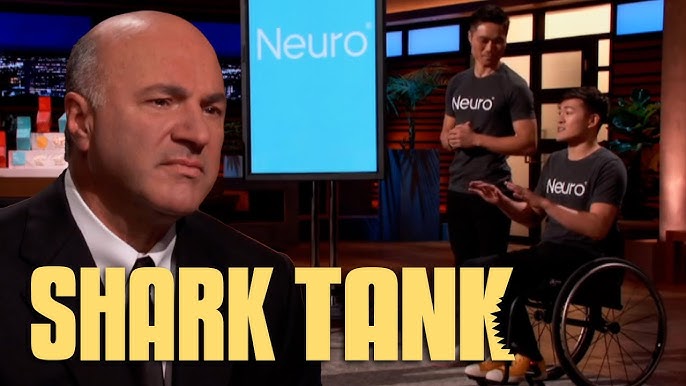
6. Neuro Gum Turned Down the Sharks and Went Broader Anyway
Neuro Gum is a useful counterexample to the idea that rejecting the sharks is reckless. Sometimes rejecting the sharks is what confident founders do when they already understand their category, know their economics, and believe they can attract stronger capital elsewhere.
Our data shows Neuro Gum went on to raise $8.3 million in venture funding and build distribution into more than 10,000 retail locations. The current Neuro site shows an active product ecosystem, a store locator, broad subscriptions and wholesale infrastructure, and thousands of product reviews across major SKUs. That is not the look of a one-hit Shark Tank novelty. It is the look of a company still building market share.
The broader lesson is simple: once a founder has proof of demand, good branding, and a product people can understand quickly, TV money stops being the only path. The founder can choose. And choice is the real leverage almost every entrepreneur wants before they walk into the Tank.
What These Companies Actually Had in Common
- They treated Shark Tank as validation, not salvation.
- They used exposure to reduce fundraising friction after the episode aired.
- They matched the type of capital to the kind of business they were actually building.
- They preserved optionality long enough for better opportunities to appear.
- They understood that distribution, partnerships, and timing can matter more than a famous investor quote.
That last point is the one most founders miss. A Shark Tank deal is emotionally satisfying because it is visible. But the invisible part of startup building is usually where the real value gets created: supply chain, retention, channel expansion, regulatory work, fundraising sequencing, and waiting for the market to catch up.
The Real Takeaway
The companies on this list did not all win the same way. Notehall found a better strategic launchpad. Swimply found venture-scale momentum. Cabinet Health used regulated crowdfunding and retail expansion. Golfkicks stacked smaller capital sources until the business became real enough to stick. Proven Skincare and Neuro Gum proved that sometimes the sharks are not rejecting a bad business - they are reacting to a business that belongs in a different capital market altogether.
That is why Shark Tank is not the endgame. It is a sorting mechanism. It tells you which founders need a deal, which founders can use the platform without the deal, and which businesses are about to become much bigger once the audience, and then the market, finally sees them.
For viewers, that makes the show more interesting. For founders, it should make the lesson obvious: do not chase famous money when better money is available.
External Sources
We combined our internal Shark Tank company data with the following public sources to verify current company activity, funding context, and present-day scale: