
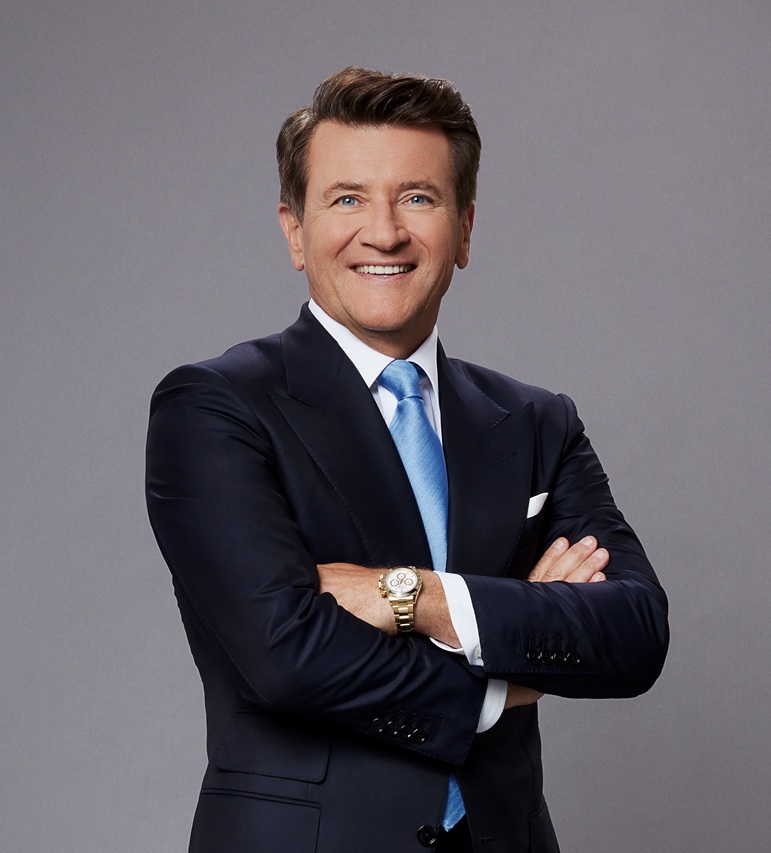
When Robert Herjavec takes his seat in the Shark Tank, he brings more than just business acumen to the table. Behind his confident demeanor lies a story of resilience, reinvention, and remarkable success in one of the most critical industries of our time: cybersecurity.
The $20 Beginning
Robert Herjavec's journey to becoming one of North America's most successful tech entrepreneurs began far from the gleaming offices of Silicon Valley. Born on September 14, 1962, in Varaždin, Croatia (then part of Yugoslavia), Robert was just eight years old when his family fled the communist regime. His father had been imprisoned repeatedly for speaking out against the government—a dangerous stance that made staying in Yugoslavia untenable.
In 1970, the Herjavec family arrived in Canada with one suitcase and $20 to their name. They landed in Halifax before settling in Toronto, where they lived in a friend's basement for 18 months. The contrast between his old life and new reality was stark. His father, who had been a successful businessman in Croatia, took work as a factory laborer to support the family. Young Robert spoke no English and felt acutely aware of his family's poverty compared to their Canadian peers.
"We had nothing," Herjavec would later recall. But his father instilled in him a powerful lesson: never complain about difficulties, and always persevere. That philosophy would become the foundation of his entrepreneurial mindset.
Finding His Path
Throughout his time at the University of Toronto, where he earned a Bachelor's degree in English Literature and Political Science in 1984, Herjavec worked a series of minimum-wage jobs to help support his family—delivering newspapers, waiting tables, retail work, even debt collecting. Nothing was beneath him if it meant moving forward.
After graduation, Herjavec took an unconventional route into the business world. He started his career in film production, working as an assistant director and field producer on various projects, notably covering the 1984 Winter Olympics. But film work was unstable, and Herjavec was looking for something more.
That's when he discovered technology. Herjavec applied for a job at Logiquest, a company that sold IBM mainframe emulation boards. There was just one problem: he had no technical background. Undeterred, he made the company an offer they couldn't refuse—he would work for free for six months to prove his value.
It worked. Not only did he land the job, but his work ethic and sales ability propelled him all the way to General Manager. The experience gave him invaluable insights into the tech industry and, more importantly, revealed a growing need that barely existed in the late 1980s: internet security solutions.
Building BRAK Systems
In 1990, Herjavec faced a pivotal moment: he was laid off from Logiquest. Rather than seeking another job, he saw an opportunity. He turned to his basement and founded BRAK Systems, an internet security software company. Starting with zero revenue and limited resources, Herjavec bet everything on the belief that businesses would soon need protection in an increasingly connected world.
He was right. As the internet exploded throughout the 1990s, BRAK Systems rode the wave, growing into one of Canada's leading internet security firms. Herjavec's ability to anticipate market needs and his relentless sales approach turned what started in his basement into a multimillion-dollar operation.
The company's success culminated in 2000 when AT&T Canada acquired BRAK Systems for $30.2 million. At 38 years old, Robert Herjavec had achieved his first major exit—a validation of his vision and a springboard for what would come next.
The Herjavec Group and Cybersecurity Dominance
After a brief stint as VP of Sales at Ramp Network (which was sold to Nokia shortly after he joined), Herjavec took some time to be with his family and plan his next move. He recognized that the cybersecurity landscape was evolving rapidly, and in 2003, he founded The Herjavec Group, determined to build something even bigger.
The timing was perfect. As cyber threats grew more sophisticated—from basic viruses to complex state-sponsored attacks—businesses desperately needed comprehensive security solutions. The Herjavec Group positioned itself as more than just a product vendor; it became a trusted partner, offering managed security services, incident response, threat detection, and strategic consulting.
The company's growth was extraordinary. Within two decades, The Herjavec Group became one of North America's largest independent cybersecurity firms, generating over $200 million in annual revenue and employing hundreds of security professionals across multiple countries.
In 2021, Herjavec sold a majority stake to Apax Partners, validating the company's position as an industry leader. The firm later merged with Fishtech Group in 2023, forming Cyderes—a global cybersecurity powerhouse with nearly 1,000 employees. Herjavec remains on the board, continuing to guide the company's strategic direction while also serving as one of the industry's most recognizable advocates for cybersecurity awareness.
Swimming with Sharks
While building his cybersecurity empire, Herjavec also became a household name through reality television. He first appeared on Canada's "Dragons' Den" before joining the inaugural season of ABC's "Shark Tank" in 2009, where he remains one of the show's most active investors.
His approach to investing reflects his own entrepreneurial journey. Herjavec gravitates toward businesses with strong technology components, scalable models, and passionate founders who remind him of his younger self. Over the course of the show, he's invested over $16 million across more than 57 deals.
His most successful Shark Tank investment is widely considered to be Tipsy Elves, a novelty sweater company. In Season 5, Herjavec invested $100,000 for a 10% stake in the company, which had about $862,000 in sales at the time. Under his mentorship, the business exploded—hitting $8 million in sales within the first year, reaching $20 million by 2016, and achieving over $317 million in lifetime sales. The company has expanded well beyond Christmas sweaters to offer festive apparel for multiple occasions.
But as Herjavec himself has said about the Tipsy Elves deal, "I didn't bet on the product, I bet on the guys." His philosophy has always been that a great entrepreneur can turn a mediocre product into a great business, while a poor entrepreneur can sink even the best product.
Other notable investments include Chord Buddy, a guitar learning tool that made the instrument more accessible to beginners, and The Red Dress Boutique, an online fashion retailer that he co-invested in with Mark Cuban for $600,000. After their Shark Tank appearance, Red Dress Boutique sold $1 million in inventory in just 18 days, becoming one of the show's standout e-commerce success stories.
Beyond Business
Herjavec's influence extends far beyond his company boardrooms and television appearances. He's an Emmy Award winner and a bestselling author who has shared his insights through books including "Driven: How to Succeed in Business and in Life", "The Will to Win: Leading, Competing, Succeeding", and "You Don't Have to Be a Shark." These books weave together his personal story with actionable business advice, inspiring countless readers to pursue their own entrepreneurial dreams.
He's also a sought-after speaker on entrepreneurship, cybersecurity, and leadership, regularly appearing at conferences and in media outlets to discuss business trends and security threats facing modern organizations.
In recognition of his contributions, Herjavec received the 2012 Ernst & Young Ontario Entrepreneur of the Year Award for Technology and the 2012 Queen Elizabeth II Diamond Jubilee Medal for outstanding service to Canada.
Beyond his professional achievements, Herjavec is known for his commitment to fitness and his passion for car racing. He's an accomplished Ferrari Challenge race car driver, earning the "Rookie of the Year" title in 2011—a testament to his competitive drive and appreciation for precision and performance. This same competitive spirit led him to appear on Season 20 of "Dancing with the Stars" in 2015, where he was partnered with professional dancer Kym Johnson. The partnership proved successful both on and off the dance floor—the couple married in 2016 and now have twin children together. Herjavec has five children in total from his current and previous marriage.
What's New: Still Hunting in 2025-2026
As Shark Tank enters its seventeenth season, Robert Herjavec remains one of the show's most active and engaged investors. His recent deals showcase his continued eye for innovative businesses with strong growth potential.
In Season 16, Herjavec made strategic investments in several promising companies. He partnered with Wildcoat, investing $350,000 for 23% equity in the novelty outerwear company—a deal that leveraged his proven expertise with Tipsy Elves in the novelty apparel space. He also invested in Coordinates, a couples' matching apparel brand with Olympic licensing, securing $100,000 for 20% equity after competitive bidding with Daymond John.
His Season 17 activity has been equally impressive. Herjavec joined forces with Lori Greiner and guest shark Rashaun Williams in a three-way deal for Dad Strength Brewing, a low-ABV craft beer company, each taking 4% equity in a combined $300,000 investment. This collaborative approach demonstrates his willingness to partner with other sharks when the right opportunity presents itself.
Beyond the Tank, Herjavec continues his advocacy for cybersecurity awareness, frequently appearing in media to discuss emerging cyber threats and the critical importance of protecting digital infrastructure in an increasingly connected world. Through his role on Cyderes' board, he remains at the forefront of the cybersecurity industry, helping guide strategy for one of the world's largest independent cybersecurity firms.
His dual presence—as both a television personality and serious cybersecurity executive—makes him unique among the Sharks. While his fellow investors are known primarily for their business empires, Herjavec bridges the gap between entertainment and critical infrastructure protection, using his platform to educate the public about threats most people never see coming.
The Empire Today
As of 2026, Robert Herjavec's net worth is estimated between $200 million and $320 million, reflecting the success of his cybersecurity ventures, Shark Tank investments, media career, and speaking engagements. But perhaps more impressive than the numbers is the impact he's had on the cybersecurity industry and the entrepreneurs he's mentored along the way.
He continues to be an active advocate for cybersecurity awareness, frequently commenting on emerging threats and the importance of protecting digital infrastructure in an increasingly connected world. Through Cyderes and his other ventures, Herjavec's companies protect thousands of organizations from cyber threats every day.
From a child who arrived in Canada with nothing—unable to speak the language and living in a basement—to a titan of technology and television, Robert Herjavec embodies the entrepreneurial dream. His story proves that with vision, resilience, hard work, and the willingness to take calculated risks, it's possible to build an empire—even starting from just $20.
More than that, his journey reminds us that success isn't just about the destination; it's about the lessons learned along the way, the people you lift up, and the legacy you create. For Robert Herjavec, that legacy is one of perseverance, innovation, and the unshakeable belief that anyone can succeed if they're willing to do the work.
Want to learn more about Robert and his fellow Sharks? Explore our deep dive into How the Sharks Build Their Investment Empires, or read about Lori Greiner's journey from a single product to retail royalty.

