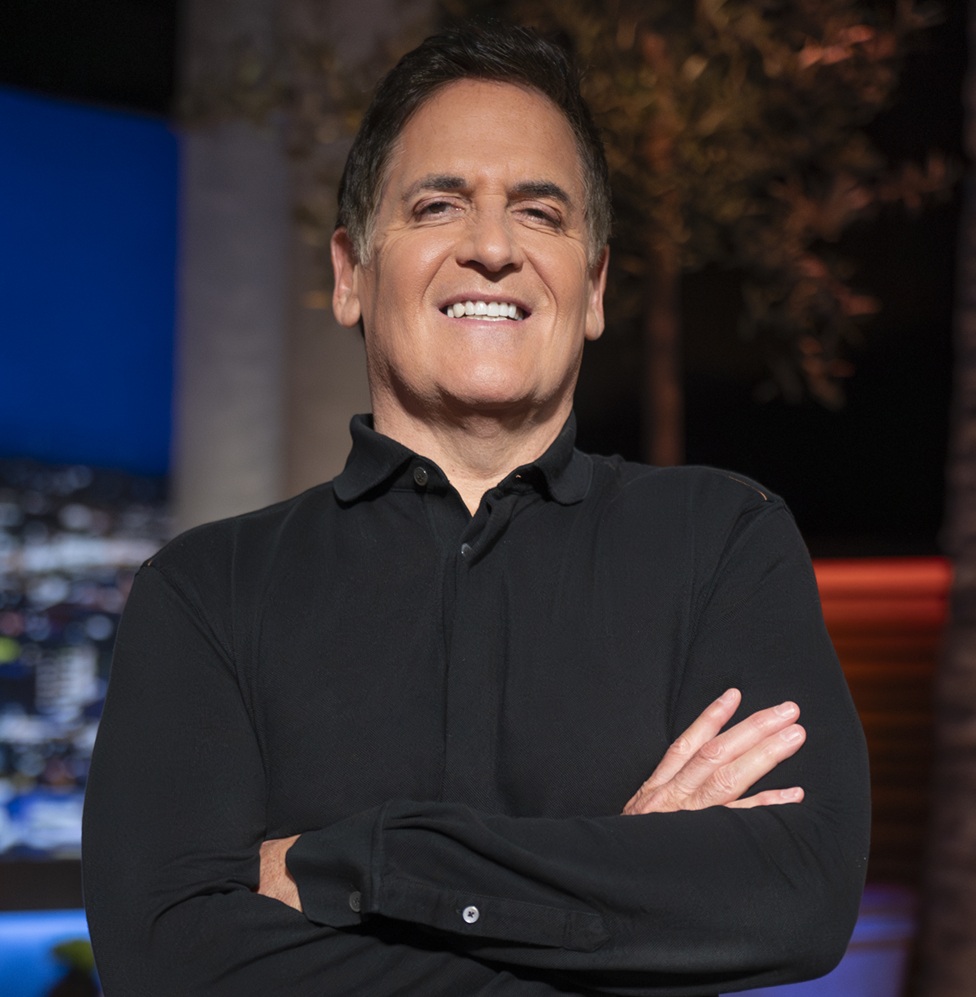
When Mark Cuban walked into the Shark Tank for the first time as a guest shark in Season 2, few could have predicted he'd become the show's most prolific investor. Sixteen seasons later, his final episode aired in May 2025. Our current dataset records 264 on-air deals involving Cuban and $65.5 million attributed to him across those televised agreements.
In November 2023, Cuban announced his departure from the show with a simple statement: "It's time." With his focus shifting to ventures like Cost Plus Drugs—his mission-driven pharmaceutical company transforming prescription drug pricing—and having sold his majority stake in the Dallas Mavericks, Cuban's exit marked the end of an era for ABC's hit reality show.
Now, with complete data spanning 17 seasons, we can analyze the full scope of Cuban's Shark Tank investment portfolio. The numbers reveal not just what he invested in, but how he evolved as an investor—and what separated his approach from every other shark in the tank.
The Numbers That Define a Legacy
264 on-air deals across Seasons 2-16 (Cuban made no deals in Season 1 before joining as a guest, and Season 17 marked his absence)
$65,473,500 committed on air across all companies
$248,006 average attributed check per deal
17.13% average attributed equity stake
196 companies currently marked in business (74.2%)
10 companies marked acquired (3.8%)
203 companies marked operating or acquired (76.9%)
61 companies marked neither operating nor acquired (23.1%)
The 76.9% operating-or-acquired figure is a company-status measure, not an investment success rate. It does not confirm that a televised deal closed, reveal Cuban's current ownership, or establish whether he earned a financial return. It is still useful for comparing how the recorded status of his portfolio changes by season and industry.
The Evolution: How Company Status Changed by Season
Perhaps the most fascinating aspect of Cuban's Shark Tank journey is how dramatically his investment performance improved as he gained experience with the show's unique ecosystem.
Early Seasons (2-5): The Learning Curve
Cuban's early seasons show a mixed current-status record. In Season 5, our dataset records 22 deals, with 9 companies currently marked operating or acquired (40.9%). He was aggressive, making several large bets on technology, entertainment, and consumer concepts.
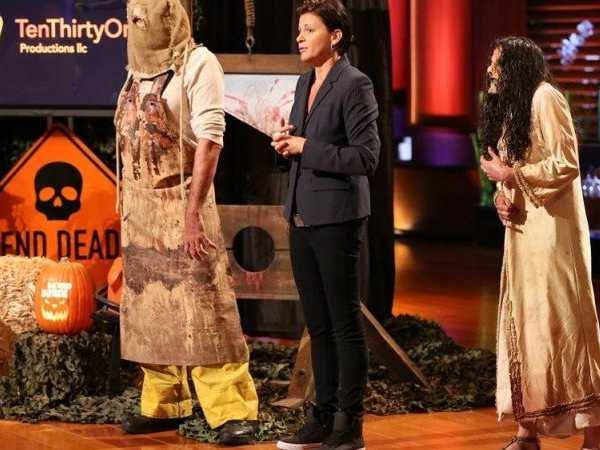
Season 5 included his largest investment ever—$2 million for 20% of Ten Thirty One Productions, a horror entertainment company that would eventually be acquired by Thirteenth Floor Entertainment, becoming one of his biggest success stories despite the season's overall struggles.
Middle Seasons (6-11): Finding His Rhythm
The middle seasons generally show higher operating-or-acquired percentages in the current snapshot, although the figures fluctuate by cohort and can change whenever a company's status is updated. They should not be read as proof of Cuban's due diligence, ownership, or investment return.
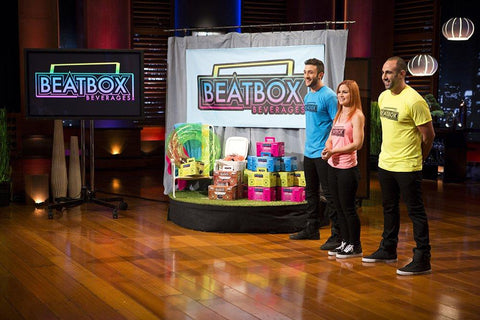
Season 6 featured one of his most legendary deals: Beat Box Beverages, where he offered $1 million for 33% equity—5x what the entrepreneurs asked for—because he recognized the massive potential in boxed wine/cocktails targeting millennials. The company has since become a major success, generating tens of millions in annual revenue.
Recent Seasons (12-16): Mastery
Cuban's final seasons currently have high operating-or-acquired shares:
Season 12: 91.3% (21 of 23 companies)
Season 13: 93.8% (15 of 16)
Season 14: 100% (19 of 19)
Season 15: 89.5% (17 of 19)
Season 16: 100% (14 of 14)
These are current company-status snapshots, not verified deal-closing or financial-return rates.
Every recorded Cuban company from Seasons 14 and 16 is currently marked operating or acquired. That is a notable status snapshot, although it cannot tell us whether every deal closed or whether Cuban earned a return.
The Biggest Investments: When Cuban Went All-In
Cuban never shied away from writing large checks when he believed in a business. His top 10 investments totaled over $11.5 million:
| Company | Season | Investment | Equity | Status |
|---|---|---|---|---|
| Ten Thirty One Productions | 5 | $2,000,000 | 20% | ✓ Acquired |
| Rugged Maniac | 5 | $1,750,000 | 25% | ✗ Failed |
| Sworkit | 7 | $1,500,000 | 10% | ✓ Operating |
| HyConn | 2 | $1,250,000 | 100% | ✓ Operating |
| D Best Products | 8 | $1,175,000 | 10% | ✓ Operating |
| Beat Box Beverages | 6 | $1,000,000 | 33% | ✓ Major Success |
| Fizzics | 8 | $1,000,000 | 8.35% | ✓ Operating |
| Nu Milk | 12 | $1,000,000 | 7% | ✓ Operating |
| UMARO Bacon | 13 | $1,000,000 | 7% | ✓ Operating |
| Cupbop Korean BBQ | 13 | $1,000,000 | 5% | ✓ Operating |
All ten of the largest checks currently attributed to Cuban are tied to companies marked operating or acquired in our dataset. Rugged Maniac is marked acquired but no longer operating. Those labels describe company status; they do not confirm Cuban's current ownership or profit on any deal.
Industry Preferences: Where Cuban Put His Money
Cuban's deal flow reveals clear patterns in what caught his attention:
Food and Beverage: 64 deals ($16.5M committed on air) — His most active category, with 43 companies (67.2%) currently marked operating or acquired.
Fitness/Sports/Outdoors: 27 deals ($9.2M committed on air) — 25 companies (92.6%) are currently marked operating or acquired, the highest share among his large industry groups.
Lifestyle/Home: 44 deals ($7.1M committed on air) — 35 companies (79.5%) are currently marked operating or acquired.
Fashion/Beauty: 38 deals ($7.8M committed on air) — 30 companies (78.9%) are currently marked operating or acquired. Cuban often partnered with Sharks who brought complementary consumer and retail experience.
Technology/Software: 18 deals ($4.5M committed on air) — 13 companies (72.2%) are currently marked operating or acquired.
Pet Products account for five recorded deals, four of which (80%) are currently marked operating or acquired.
The Power Couple: Cuban and Lori Greiner
Cuban worked with every shark throughout his tenure, but one partnership stood out: Lori Greiner.
They made 54 joint deals together—far more than any other pairing. The "power couple" complemented each other perfectly: Cuban brought tech expertise and aggressive scaling capital, while Lori offered QVC distribution, product development mastery, and retail relationships.
Other frequent partners included:
• Barbara Corcoran: 27 joint deals
• Robert Herjavec: 20 joint deals
• Daymond John: 19 joint deals
• Kevin O'Leary: 16 joint deals (despite their on-screen rivalry)
The data reveals that Cuban was equally comfortable going solo (51.3% of deals) or partnering (48.7%)—a balanced approach that let him pursue both concentrated bets and shared-risk ventures.
The Acquisitions: Cuban's Biggest Exits
Our current dataset marks 10 Cuban-backed companies as acquired. An acquisition label does not by itself disclose Cuban's ownership at the time or his return:
- Ten Thirty One Productions — Acquired by Thirteenth Floor Entertainment (Cuban invested $2M for 20%)
- Plated — Acquired by Albertsons supermarket chain ($500K for 5.6%, though later shut down)
- Groove Book — Acquired by Shutterfly ($75K for 40%)
- Roominate — Acquired by PlayMonster ($250K for 2.5%)
- Reward Stock — Acquired by Experian ($320K for 10%)
- Misto Box — Acquired by Clive Coffee ($75K for 30%)
- Verbalize It — Acquired by Smartling ($250K for 20%)
- Rugged Maniac — Acquired by New Media Investment Group, later failed ($1.75M for 25%)
- Noene Insoles — Acquired by Foot Solutions ($100K for 15%)
- BRUW Coffee — Acquired by Snarky Tea ($50K for 30%)
The amounts attributed to Cuban across these 10 televised deals total $5.37 million. Because most closing terms, later dilution, ownership positions, and exit proceeds are private, the public information is not sufficient to calculate his returns.
The Cash vs. Paper Value Reality Check
Here's where the story gets interesting—and honest. In a 2022 interview on the Full Send Podcast, Cuban admitted something most investors won't: "On a cash basis, I'm getting beat." He revealed that after investing approximately $20-29 million across 85+ companies, he hadn't yet made a profit when counting only actual cash returned from exits.
But that's not the whole story. At a 2025 Fortune Brainstorm Tech Dinner, Cuban clarified with a crucial distinction: "On a mark-to-market basis, I'm killing it."
Translation? While Cuban hasn't gotten enough cash back from exits to exceed his total investment, the unrealized value of his equity stakes has skyrocketed. He pointed to specific examples:
- Beat Box Beverages — Invested $1M for 33%, company now generates nearly $200M annually in revenue
- Dude Wipes — Invested $300K for 25%; the company reported $110M in 2023 revenue before taking a TSG Consumer investment in 2025
- Multiple other Shark Tank companies — Cuban owns chunks of companies now worth over $100M each
"But I don't count that because it's not cash," Cuban said. "I'm crushing it on the market."
This is the reality of venture capital: on paper, Cuban's Shark Tank portfolio has appreciated tremendously. His equity stakes are worth far more than what he paid. But until companies get acquired or go public, that wealth remains unrealized. It's the classic VC challenge—you can be a billionaire on paper while still being cash-flow negative on a specific portfolio.
For context, this isn't unusual. Even top venture capital firms typically see only 10-20% of their portfolio companies generate the returns that make the entire fund profitable. Cuban's 78% "still operating" rate and growing paper valuations suggest he's positioned for strong future returns—he just hasn't cashed out yet.
The Biggest Losses: When Cuban Got It Wrong
Even the best investors fail. Cuban's biggest losses included:
- Rugged Maniac — $1,750,000 lost on obstacle race company
- Trunkster — $700,000 lost on smart luggage
- Fixed — $700,000 lost on wireless service provider
- Delighted by Hummus — $600,000 lost on dessert hummus
- Life Lift Systems — $550,000 lost on wheelchair platform
- Style Club — $500,000 lost on fashion rental
- Pearachute — $500,000 lost on mom boutique
- Solsource Grill — $500,000 lost on solar grill
- Bottlekeeper — $500,000 lost on beer insulator
The ten largest checks tied to companies currently marked not operating total approximately $6.8 million in on-air commitments. That is not the same as $6.8 million in losses: some televised deals may not have closed, and the dataset does not disclose distributions, write-offs, or proceeds.
Interestingly, many of Cuban's biggest losses came from taking low equity stakes in high-valuation deals. Trunkster, Bottlekeeper, and Solsource all involved equity stakes of 2.5-4%, betting on "unicorn" potential that never materialized.
Small Bets, Big Returns: The Lottery Tickets
Not every Cuban deal was a massive check. Several of his smallest recorded investments are tied to companies still marked in business:
- Q-Flex — $12,500 for 12.5% (S6) — Still operating
- Cup Board Pro — $20,000 for 4% (S10) — Still operating
- I Want To Draw A Cat For You — $25,000 for 33% (S3) — Still operating
- Flasky Flowers — $25,000 for 10% (S13) — Still operating
- Eyewris — $25,000 for 4% (S14) — Still operating
These "lottery ticket" deals often succeeded because they were scrappy businesses with minimal overhead, passionate founders, and realistic expectations. Cuban could afford to sprinkle small bets across interesting concepts, and many paid off.
The Complete Buyouts: When Cuban Bought Entire Companies
On four occasions, Cuban didn't just invest—he bought the entire company outright for 100% equity:
- HyConn (S2) — $1.25M for 100% — Still operating, fire hydrant coupling system
- Wine Balloon (S3) — $400K for 100% — Still operating with $7M revenue
- Cool Wraps (S4) — $250K for 100% — Failed
- Evrewares (S6) — $200K for 100% — Failed
The current status record for full-buyout offers is mixed. It also cannot establish whether Cuban ultimately purchased each company or what financial result followed, because televised agreements remain subject to post-show diligence.
The Over-Delivery Deals: When Cuban Shocked Entrepreneurs
One of Cuban's trademarks was offering far more money than entrepreneurs asked for when he saw massive potential:
• D Best Products — Asked $350K, Cuban offered $2.35M (571% more!)
• Fizzics — Asked $500K, got $2M (300% more)
• X Craft — Asked $500K, got $1.5M (200% more)
• Beat Box Beverages — Asked $200K, got $1M (400% more)
• HyConn — Asked $500K, got $1.25M (150% more)
These aggressive offers served dual purposes: securing the deal against competing sharks and providing enough capital to truly scale fast. Cuban understood that undercapitalization kills more businesses than failure—when he believed in something, he made sure the company had the resources to win.
Why Cuban Left: The Cost Plus Drugs Factor
In November 2023, Cuban announced Season 16 would be his last, stating simply: "It's time." His final episode aired in May 2025, ending 14 years on the show.
The timing coincided with major life changes:
- Cost Plus Drugs — Cuban's online pharmacy offering transparent pricing on generic medications had grown to over $100M in annual revenue, requiring more of his attention
- Selling control of the Mavericks — Cuban sold the controlling interest to the Adelson and Dumont families in late 2023 and retained a minority stake
- Political engagement — Cuban became increasingly active in political discourse and was even approached about serving as Kamala Harris's VP pick in 2024 (which he declined)
- Sixteen seasons — Simply put, 16 years on any show is a long run
Cuban reflected in his final episode: "I thought [Shark Tank] was not gonna last. But here we are, all these years later, and it's been an incredible journey."
What Made Cuban Different From Other Sharks
Analyzing 264 recorded deals reveals patterns that separated Cuban from his fellow sharks:
1. Willingness to Overpay
Cuban regularly offered more money than asked for. Other sharks negotiated down; Cuban saw capital as competitive advantage.
2. Complete Buyouts
Cuban was the only shark to regularly offer 100% acquisitions. He wasn't just an investor—he was a buyer when he saw full potential.
3. Tech-Forward Thinking
As an internet entrepreneur who sold Broadcast.com to Yahoo for $5.7 billion, Cuban understood technology businesses in ways other sharks didn't. He saw SaaS, digital platforms, and app-based businesses as opportunities, not risks.
4. Sports & Fitness Experience
Cuban's long involvement with the Dallas Mavericks gave him relevant experience for sports businesses. In the current dataset, 25 of his 27 Fitness/Sports/Outdoors companies are marked operating or acquired.
5. Learning & Adaptation
That jump from 28.6% success in Season 5 to 100% in Seasons 14 and 16? That's systematic learning. Cuban got better at identifying which entrepreneurs could execute, which markets were real, and which business models had staying power.
The Impact on Season 17 and Beyond
Cuban's absence in Season 17 has been noticeable. Viewership dropped 25% year-over-year, with the Season 17 premiere drawing 1.88 million viewers compared to Season 16's 2.4 million.
The episode featuring Cuban's final appearance—his farewell in May 2025—was the highest-rated episode of Season 17, drawing 2.91 million viewers. Clearly, his presence still matters.
Guest shark Kendra Scott has filled some of the void, bringing fashion and retail expertise, but the chemistry that Cuban brought—the competitive fire, the willingness to write huge checks, the tech knowledge—remains irreplaceable.
The Legacy: One of TV's Greatest Investment Track Records
Mark Cuban didn't just appear on Shark Tank—he helped define what the show became. His 264 recorded deals make him the most active Shark in our Seasons 1-17 dataset.
The current status data show that 76.9% of those companies are marked operating or acquired, including every recorded Cuban deal from Seasons 14 and 16. That is evidence of company persistence in our current snapshot, but it is not enough to calculate Cuban's investment returns.
The companies he invested in collectively employ thousands of people. Products he backed sit on shelves at Target, Walmart, and Whole Foods. Apps he funded have been downloaded millions of times. Restaurants he supported have expanded to multiple locations.
And while we may never see Mark Cuban in the tank again, his legacy lives on in 196 companies currently marked in business, 10 companies marked acquired, and the entrepreneurs who received an opportunity because he made an offer on television.
As Cuban himself might say: "And for that reason, I'm out." But what a run it was.
The Bottom Line
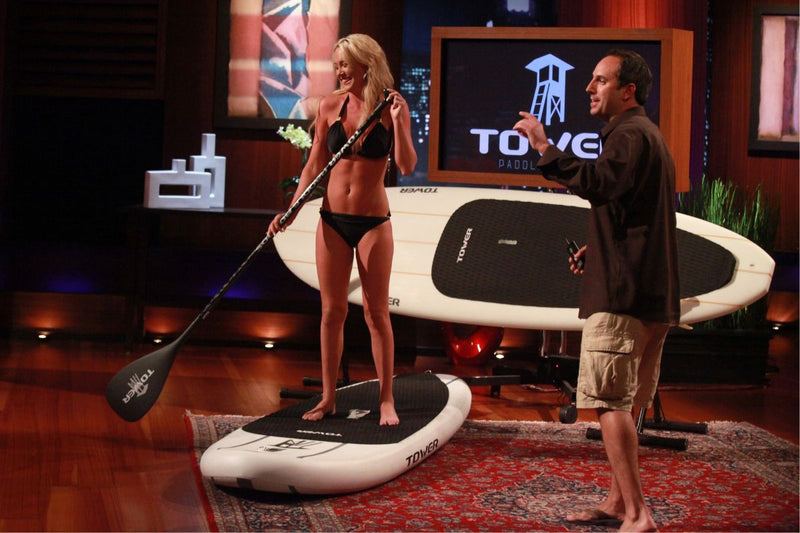
Mark Cuban's 16 seasons on Shark Tank created one of the most intriguing investment portfolios in reality TV history. From Beat Box Beverages to Sworkit to Tower Paddle Boards, his deals generated hundreds of millions in revenue, created thousands of jobs, and built substantial equity value—even if much of it remains unrealized.
The numbers tell a nuanced story: 264 on-air deals, $65.5 million attributed to Cuban, and 76.9% of the companies currently marked operating or acquired. The public data do not disclose enough about closed deals, ownership, exits, and cash flows to calculate a reliable portfolio return, but they do document the breadth and persistence of his televised dealmaking.