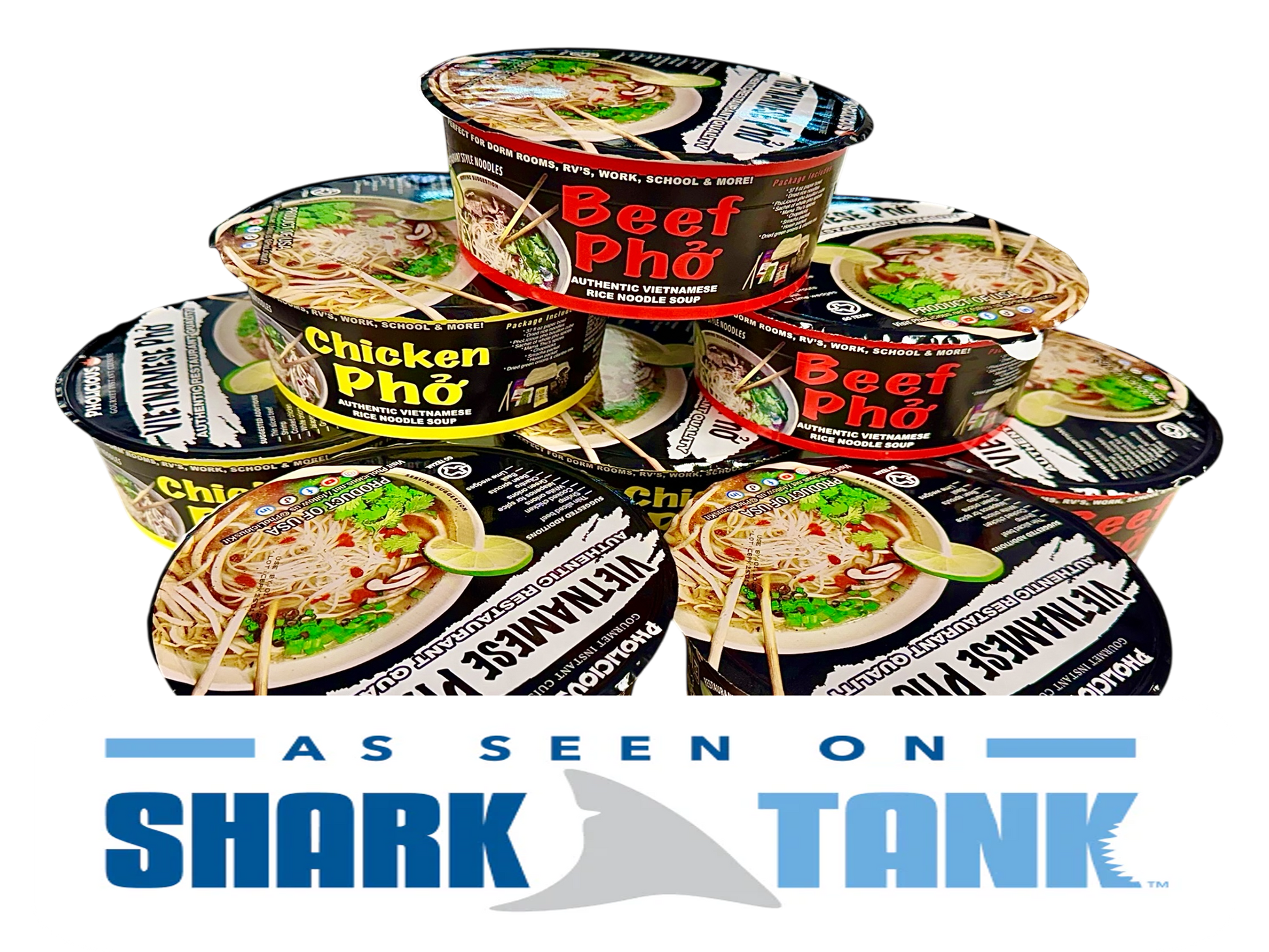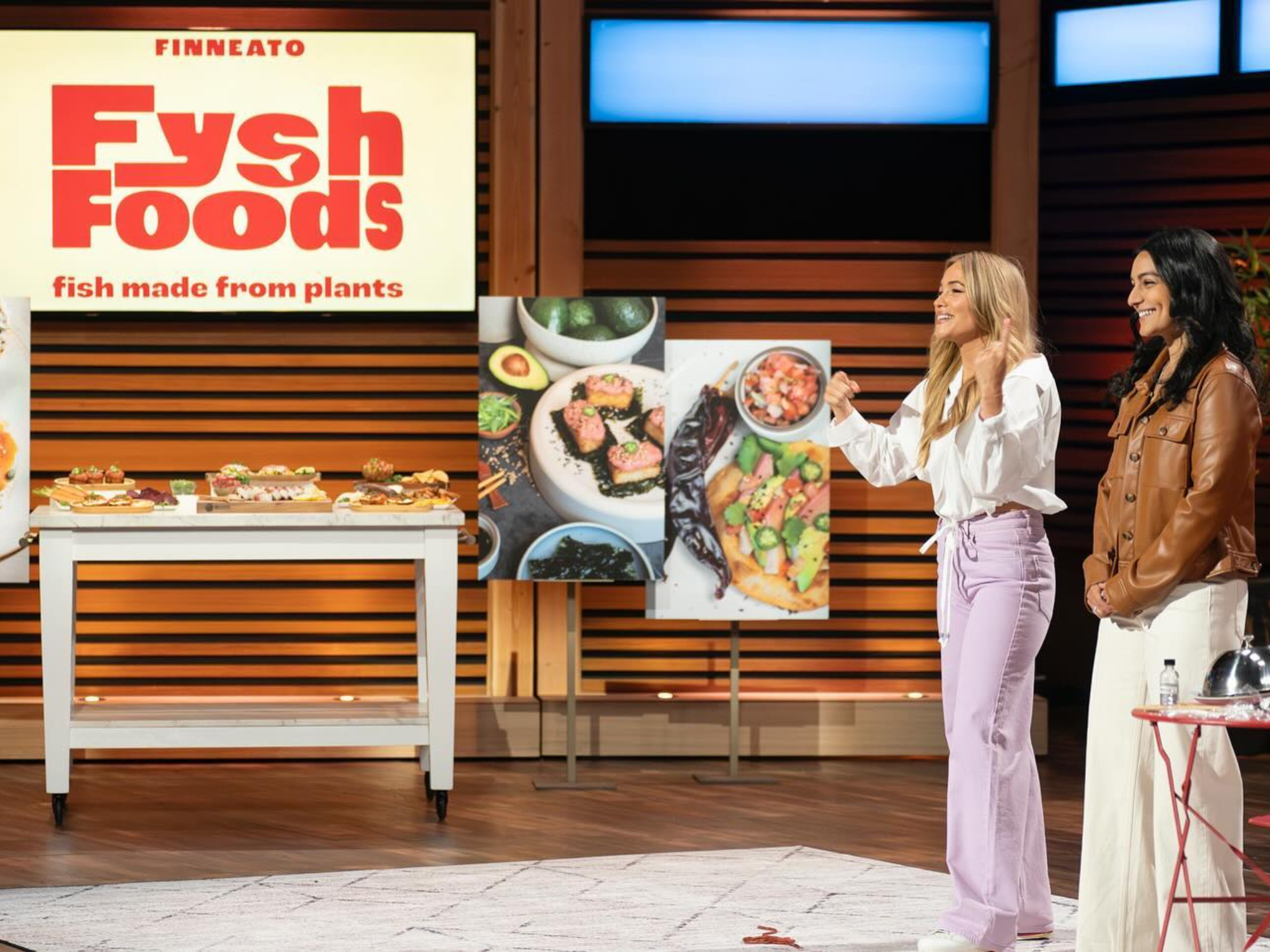
September has brought four very different updates from the Shark Tank world. Fysh Foods has been acquired and is ending ordinary retail sales. Pho Licious says its products now have pickup, delivery or in-store availability through 3,300 Walmart locations. Cousins Maine Lobster founders Jim Tselikis and Sabin Lomac are preparing to release a book about the business they almost lost. Shark Daniel Lubetzky, meanwhile, has launched a podcast built around the failures that come before recognizable success.
The common thread is what happens after exposure. A television appearance can create attention, but the durable decisions come later: which sales channel to pursue, how widely to distribute, when to hand a company to a new owner and how to turn hard-earned experience into something new. Here is what has been confirmed, what remains uncertain and why each development matters.
| Update | Verified development | Important context |
|---|---|---|
| Fysh Foods | Acquired by City Roots Hospitality in an all-cash deal that closed in August 2026 | Price undisclosed; normal retail and e-commerce sales have ended |
| PhoLicious | Company reports Walmart availability across 3,300 locations | The count comes from PhoLicious and includes pickup, delivery or in-store availability |
| Cousins Maine Lobster | Life and Lobster scheduled for nationwide release September 22 | Publisher reports more than 75 trucks and restaurants |
| Daniel Lubetzky | Build or Break launched September 3 | The companion Art of Failure pop-up ran September 3–5 in New York |
Fysh Foods Is Acquired—and Leaves Retail Behind
The most consequential update is Fysh Foods' acquisition by City Roots Hospitality, a New York plant-based restaurant group led by chef and restaurateur Guy Vaknin. Industry coverage reports that the all-cash transaction closed in August 2026. Neither side disclosed the purchase price. Fysh's official website now identifies the company as part of City Roots and describes the product as built for professional kitchens.
This is not simply a change of ownership. Fysh has closed its normal retail and e-commerce channels. The official site says the product is no longer available for retail and that its plant-based seafood will live within City Roots Hospitality. Restaurants, hotels and foodservice operators can still submit inquiries, but an individual shopper can no longer order the spicy tuna packs through the ordinary direct-to-consumer storefront.
Why the Foodservice Pivot Fits Fysh's Original Model
Zoya Biglary and Alix Traeger brought Fysh Foods to Season 16, Episode 4, asking for $150,000 for 10% equity. At the time of the pitch, the company had generated approximately $50,000 in revenue and was already centered on business-to-business foodservice sales in Los Angeles. Its plant-based alternative to raw fish was designed for dishes such as sushi, poke and ceviche, giving chefs a product to work into a finished menu rather than merely another packaged grocery item.
Daniel Lubetzky agreed on air to invest $150,000 for 30%. New acquisition coverage, attributing the information to the company, says that investment was never completed and that Biglary kept Fysh self-funded through the sale. That distinction is important: the televised agreement remains part of the Shark Tank story, but the available reporting indicates Lubetzky did not own the on-air stake when City Roots acquired the business.
Under City Roots, the raw-fish concept is expected to be reworked for sit-down dining alongside the group's existing menus. The buyer has also discussed the possibility of taking Fysh beyond New York as its restaurant portfolio expands, but no timetable or additional cities have been announced. The careful conclusion is that Fysh has found a new operating home—not that a national restaurant rollout is already underway.
Acquisition stories are often treated as simple victories, but this one is more interesting. Biglary built a recognizable brand without a venture round, tested both wholesale and direct-to-consumer demand, and ultimately chose an owner whose kitchens can make the product part of a complete dining experience. Retail customers lose direct access, while the underlying recipe, brand and foodservice opportunity continue. It is an exit and a strategic narrowing at the same time.
PhoLicious Reports Availability Through 3,300 Walmart Locations
PhoLicious is moving in the opposite direction: toward much broader consumer distribution. Its current Where to Buy page states that Walmart pickup, delivery or in-store availability spans 3,300 locations. Because the figure is published by PhoLicious rather than in a new Walmart announcement, it is best understood as the company's current distribution claim. Availability can also vary by product and ZIP code.
The scale of the reported jump is striking. When Joseph and Anh Trousdale appeared in Season 16, Episode 8, the business described distribution in 250 Walmart stores and 133 Sam's Clubs. A 3,300-location Walmart footprint would be more than thirteen times the pitch-time Walmart count. The company's page also lists other channels, including Amazon, Target+, H-E-B, Hy-Vee, Kroger and Sam's Club, though those relationships do not all represent the same kind of nationwide shelf placement.
PhoLicious Is Expanding Beyond Pho
The retail expansion is arriving with a broader product line. PhoLicious identifies its Bún Bò Huế—a spicy Vietnamese beef rice-noodle soup—as a Walmart exclusive and says it is available at select Walmart stores, with Walmart.com availability listed for September 2026. The company's separate Pad Thai page identifies that bowl as coming in September 2026, although the direct product listing was marked sold out when checked on September 5. That makes it an announced launch, not yet proof of widespread consumer availability.
This matters because the company is gradually becoming more than an instant-pho brand. Pho remains the product and cultural story that brought the Trousdales to television, but Bún Bò Huế and Pad Thai give retail buyers multiple reasons to allocate shelf space. They also let PhoLicious compete across a wider Asian-inspired instant-meal category instead of depending on one dish.
The founders asked the Sharks for $500,000 for 10% after reporting $2.1 million in 2023 sales and projecting $5 million to $6 million for 2024. Kevin O'Leary made the on-air deal at $500,000 for 15%. The new store count does not disclose revenue, sell-through or whether every flavor is carried in every location, but it does document a dramatically larger potential retail network than the one presented in the Tank. The next revealing metric would be repeat orders: wide placement creates opportunity, while sustained reorders show that shoppers are pulling the product through the system.
Cousins Maine Lobster Founders Put the Difficult Parts in a Book
Jim Tselikis and Sabin Lomac are releasing Life and Lobster nationwide on September 22, 2026. The publisher describes it as both a founder story and a practical guide to resilience, hiring, working with family, taking risks and building a brand. BenBella Books currently lists hardcover and electronic editions, with separate ISBNs for each format.
The fresh statistic attached to the launch is the size of the system. The publisher says Cousins Maine Lobster has grown from one Los Angeles truck in 2012 to more than 75 units, including gourmet food trucks and fast-casual restaurants. That is a substantial update from the 53 locations recorded in July 2024 in our company data. Different sources sometimes use units, locations, trucks and restaurants differently, so the most precise current wording is more than 75 trucks and restaurants combined.
Their original Season 4 deal remains one of Barbara Corcoran's signature investments. The cousins asked for $55,000 for 5%; Barbara ultimately invested $55,000 for 15%. Their own book page promises more than a polished success narrative, including the preparation before Shark Tank, occasions when the founders did not follow Barbara's advice and a period when the business nearly went bankrupt.
That is a better publishing angle than another victory lap. Franchising a food truck concept requires supply-chain control, local operators, consistent food and a culture that survives distance from the founders. The failures and disagreements behind that system may be more instructive than its headline sales. For more on the company's earlier growth milestones, see our previous Cousins Maine Lobster update.
Daniel Lubetzky Launches Build or Break
Daniel Lubetzky launched Build or Break on September 3. The weekly video podcast focuses on the failures, setbacks and decisions behind accomplished founders, athletes, creators and public figures. Its opening release included conversations with Kevin O'Leary, Chris Paul and Kendra Scott. Announced season guests also include Barbara Corcoran, Mark Cuban, Jamie Siminoff, Matthew McConaughey, Chip and Joanna Gaines and others.
The launch extended beyond audio and video. Lubetzky opened Art of Failure, a free immersive pop-up at 22 Wooster Street in New York, from September 3 through September 5. The exhibit presented rejection letters, abandoned ideas, failed prototypes and other artifacts as museum pieces, connecting the podcast's premise to physical evidence that recognizable careers rarely move in a straight line.
It is a logical media project for Lubetzky's expanded Shark Tank role. His investing style often emphasizes a founder's purpose and capacity to learn, while the podcast asks guests to examine the moments when those qualities were tested. Unlike the other three stories, this is not an operating update for a pitched company. It is evidence of a Shark using the show's central subject—building under pressure—to create a separate editorial platform.
What These Four Updates Say About Life After Shark Tank
Together, the updates offer four versions of growth. Fysh Foods chose specialization and a buyer with restaurant infrastructure. PhoLicious pursued mass-market reach and additional meal categories. Cousins Maine Lobster turned fourteen years of operating lessons into intellectual property. Daniel Lubetzky built a media project around the setbacks that conventional success stories edit out.
None of the headline numbers answers every question. Fysh's purchase price is private. PhoLicious's 3,300-location claim does not reveal sales per store. A 75-unit network does not make Cousins Maine Lobster's difficult periods disappear. A high-profile podcast guest list does not guarantee a lasting audience. But these are meaningful, verifiable developments—and each shows that the work after a Shark Tank appearance is less about staying visible than choosing what the business should become next.
Sources
- Fysh Foods Official Website and Acquisition Notice — accessed September 5, 2026
- City Roots Hospitality Acquires Plant-Based Raw Fish Brand Fysh Foods — vegconomist, September 1, 2026
- City Roots Hospitality Acquires Sushi-Grade Plant-Based Seafood Brand Fysh Foods — The Plant Base, September 2, 2026
- Where to Buy PhoLicious — PhoLicious Foods, accessed September 5, 2026
- PhoLicious Instant Bún Bò Huế Product Page — accessed September 5, 2026
- PhoLicious Instant Pad Thai Product Page — accessed September 5, 2026
- Life and Lobster — BenBella Books, accessed September 5, 2026
- Life and Lobster: From Shark Tank to a Billion-Dollar Business — Cousins Maine Lobster, accessed September 5, 2026
- Daniel Lubetzky Launches Build or Break Podcast and Art of Failure Gallery — Build or Break, August 25, 2026
- Build or Break — Apple Podcasts, accessed September 5, 2026
- Shark Tank Season 4, Episode 6; Season 16, Episodes 4 and 8 — ABC; pitch and on-air deal facts cross-checked against the site's Shark Tank dataset.