
Not every Shark Tank deal ends the same way. Some companies ride their episode to cultural relevance, expand into major retail, and become exactly what the founders hoped. Others travel a more complicated road — through acquisition, corporate reorganization, and, in at least one 2026 case, federal court. Two companies from very different seasons of the show are writing very different chapters right now, and both are worth paying attention to.
Fishwife: The Tank Deal That Helped Launch a Cultural Moment
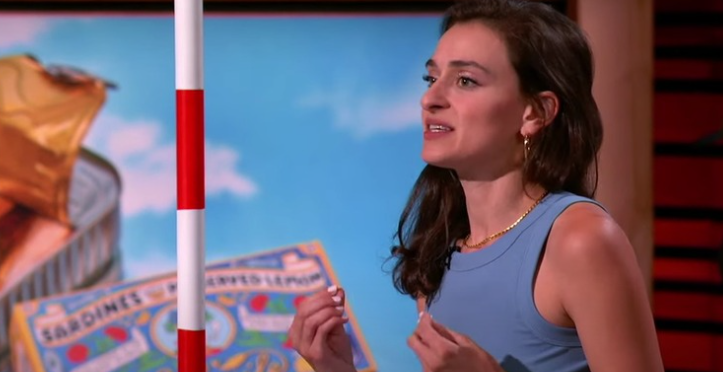
When Becca Millstein walked into the Shark Tank in January 2024, she wasn't just pitching canned fish — she was pitching a reimagining of an entire pantry category. Fishwife, her Los Angeles-based premium tinned seafood brand, had already grown from $750,000 in 2021 sales to $2.6 million in 2022, with projections of $5.8 million for the year of filming. She entered the Tank on Season 15, Episode 10 asking for $350,000 in exchange for 4% equity — a valuation of $8.75 million.
She left with a better deal in terms of capital access, if not equity. Lori Greiner and guest shark Candace Nelson partnered to invest $350,000 for 6% equity total, each contributing $175,000 for 3% of the company. The dilution was a fair price for what came next: two sharks with deep food industry and retail networks, and millions of television viewers seeing Fishwife's distinctively colorful packaging for the first time at exactly the right cultural moment.
That moment turned out to be the start of a wave that has yet to crest. Americans bought $3.52 billion worth of shelf-stable seafood over the past year. Sardines have overtaken salmon as the second most popular tinned fish behind tuna. Online discourse around tinned fish climbed 30% year over year among Gen Z and millennials, according to market research firm Tastewise. The US protein market was valued at $114 billion as of 2024, and sardines quietly check every box on the modern nutrition checklist: a typical four-ounce can delivers 18 to 25 grams of protein in under 200 calories, with almost none of the added salt, sugar, or fat found in most packaged foods.
From the Whole Foods Aisle to Costco
At the time of her pitch, Millstein mentioned an impending national Whole Foods partnership as a major growth driver. That partnership materialized — and Fishwife has since expanded to Costco locations nationwide, a significant retail milestone for any premium food brand. Getting onto Costco's shelf is typically reserved for products with both proven mass consumer appeal and demonstrated operational scale. Fishwife achieving both while maintaining its premium positioning is an outcome that few emerging food brands manage.
The brand's product line has also expanded well beyond sardines. Good Housekeeping conducted a comprehensive taste test of Fishwife's entire lineup in April 2026, working through albacore tuna, smoked trout, smoked salmon, mackerel, sardines, and anchovies across more than a dozen flavor variations. The verdict was broadly enthusiastic. Standouts included the Smoked Salmon with Sichuan Chili Crisp — described as having "a deep savory, umami-forward profile, almost like the fish was braised in a soy-based sauce" and the kind of product you could "pop open tired from work, put it over rice, and that's dinner, done." The Albacore Tuna with Soy Ginger earned the top tuna ranking for its umami depth and balance. And the Smoked Rainbow Trout earned consistent praise for its buttery, melt-in-your-mouth texture and versatility. The anchovies were called "less fishy than typical anchovies — more refined." Overall, Good Housekeeping concluded that "you can't really go wrong with Fishwife's tinned fish" and noted a consistent level of quality across the lineup that speaks to how well the canning process has been refined.
Sardinecore, Tinfluencers, and the Cultural Engine
The market momentum behind Fishwife isn't purely nutritional — it is also deeply cultural. The tinned fish renaissance has spawned a thriving community of "tinfluencers" — creators on YouTube and TikTok who review, recipe-test, and evangelize canned seafood to audiences in the hundreds of thousands. Sardine date nights, sea-cuterie boards, and sardine martinis (the "sardini") have all gone viral in their own right. The broader aesthetic — nautical knickknacks, kitschy fish-print dresses, coastal color palettes, fisherman hats — even has a name: sardinecore.
Fishwife was almost purpose-built for this cultural moment. The brand's bold illustrated packaging photographs beautifully for social media grids and TikTok feeds. Millstein has noted that customers routinely comment that they don't even like seafood but have become hooked on the brand's imagery alone — and then stay for the taste. It's a rare case where product design is doing real conversion work, pulling in new buyers who become repeat customers because the quality delivers on the aesthetic promise.
Millstein has been direct about her long-term view. "I think we're not at peak tinned fish. Not even close," she told Business Insider earlier this year. "Our entire mission is to get to the point where no one's calling it a trend anymore." As of 2025, just under half of US consumers had tried tinned fish, and only 9% of fish-eating Americans named it as their most frequent choice — which means the category still has enormous room to grow. Fishwife's combination of premium positioning, national distribution, and authentic brand story puts it in a strong position to capture a large share of new entrants to the category.
The Broader Shark Strategy at Work
One detail from the Fishwife deal that deserves a closer look: at the time of filming, Lori Greiner specifically mentioned the potential for Fishwife to collaborate with Boarderie, her Season 14 investment — the artisan charcuterie board company that grew to over $70 million in lifetime sales. The concept: pair premium tinned seafood with premium charcuterie for a complete elevated entertaining experience, targeting the same upmarket, food-forward consumer. Whether that formal partnership materialized or not, it illustrates how experienced sharks think about portfolio synergies — not just the deal in front of them, but the network of companies they can connect.
Scholly: From Shark Tank's Wildest Fight to a Federal Lawsuit
The other story unfolding in 2026 is a more complicated one — and a cautionary tale about what can happen after the cameras stop rolling and an acquisition closes.
Christopher Gray founded Scholly out of his own painful experience with the scholarship system. Growing up low-income in Birmingham, Alabama, with a single mother and two siblings, Gray applied to approximately 75 scholarships over seven months using public library computers and won around $1.3 million in scholarship funding — including awards from the Bill and Melinda Gates Foundation and the Coca-Cola Scholars Foundation. He studied economics and entrepreneurship at Drexel University, met other students struggling with the same fragmented process, and launched Scholly in 2013 alongside co-founders Nick Pirollo and Bryson Alef. The app matched students to scholarships using eight core eligibility criteria — age, location, major, GPA, race, gender, field of study, and financial need — for just $0.99 a month.
Gray pitched Scholly on Season 6 of Shark Tank, airing February 20, 2015. He asked for $40,000 in exchange for 15% equity, implying a $266,667 valuation. What followed became one of the most referenced moments in the show's history. Lori Greiner offered the full ask and pressured Gray to accept immediately. Daymond John jumped in as a co-investor. Kevin O'Leary accused the panel of treating it as charity rather than business. Robert Herjavec stormed off, followed by Mark Cuban and Kevin — leaving Lori and Daymond to each invest $20,000 for 7.5% equity apiece, completing the $40,000 deal at 15% total.
The deal proved out spectacularly. Scholly grew to 5 million users and more than $30 million in cumulative revenue. Daymond John later reported his investment had increased more than 40 times in value. The app helped students unlock over $100 million in scholarships. Then, in July 2023, Sallie Mae acquired Scholly's key assets — making Gray one of the few Black venture-backed fintech founders to exit to a major financial institution. As part of the deal, Sallie Mae promised to make the app free for all students. Gray joined the company as a vice president of product management, expecting to scale Scholly within a well-resourced institution.
What Gray Says Went Wrong
One year after the acquisition closed, the picture changed. According to a lawsuit Gray filed in Delaware Superior Court in April 2026, and a whistleblower complaint he submitted to the Securities and Exchange Commission around the same time, Sallie Mae laid off the Scholly founding team — including his co-founders — in July 2024. Gray alleges he then heard executives discuss plans to sell Scholly user data. When he raised those concerns internally, he says he was fired before a scheduled meeting with Sallie Mae CEO Jon Witter where he planned to address the issue directly.
At the center of the legal dispute is a separate entity called Sallie.com, operated by SLM Education Services, LLC — which is now where Scholly's platform lives. Gray contends in his filings that Sallie Mae routed Scholly through SLM Education Services, a less regulated non-bank subsidiary, in order to sell personal data that the banking arm itself would be restricted from selling. The Sallie.com privacy policy discloses that data sold to third parties includes name, phone number, email address, age, race, gender, education records, and geolocation — and that buyers include ad networks, educational institutions, brands, and consumer data resellers. Gray also points to Backpack Media, which Sallie launched in March 2026 and describes as an "education media network" offering brands efficient access to Gen Z and Gen Alpha audiences — audiences Gray argues are built, at their foundation, on Scholly's student database.
Sallie Mae denied all allegations, calling them "without merit," and declined to answer specific questions about its data privacy practices or Backpack Media's data sourcing. Gray has said publicly that he does not regret selling Scholly — making the app free for students who needed it was a meaningful outcome — but he is unambiguous about why he filed suit: "I sold Scholly to a regulated bank because I believed it would protect the students who trusted us. Instead, I watched the company build a non-bank subsidiary to do things the bank itself can't legally do: sell student data. That's not the company I thought I was joining."
The lawsuit is ongoing. Gray is seeking backpay and punitive damages, plus legal costs. The SEC whistleblower complaint is a separate channel that could draw regulatory scrutiny independent of the civil case. Sallie Mae's broader record with regulators is worth noting here: a company called Navient, which split from Sallie Mae in 2014, reached a $1.85 billion settlement with 39 state attorneys general over what they described as predatory student loan practices. Gray said he was aware of this history when he agreed to sell — but that he believed the regulated bank structure would serve as a meaningful safeguard.
Two Companies, Two Very Different 2026 Chapters
Fishwife and Scholly don't have much in common on the surface. One sells sardines, the other built a scholarship app. One got a deal in Season 15, the other in Season 6. But both companies were built around a genuine insight about a real problem — a gap in how Americans think about everyday food, and a gap in how students access financial aid — and both founders were in their mid-to-late twenties when they pitched. What separates their 2026 trajectories isn't the quality of the original idea. It's what happened after the deal.
Becca Millstein retained operational control of Fishwife, took on two investors who could open retail doors rather than dictate direction, and is now watching a cultural tide carry her product into Costco warehouses and national magazine taste tests. Christopher Gray made a different bet — that selling to a major financial institution would protect his users while expanding Scholly's reach far beyond what a startup could manage independently. He believes the bet was made in good faith. He also believes it was violated.
For founders thinking about what comes after a Shark Tank deal — whether that's a growth partnership, a private equity round, or a full acquisition — both stories are worth sitting with. Staying independent and riding a market wave is hard. Selling to a larger organization that operates with different incentives and a different cost structure is complicated in ways that term sheets don't always capture. Gray himself said he would make the same decision to sell again. But he would also raise the same concerns again. That distinction, more than the legal outcome, may be the most useful thing either story has to offer.
Sources
- Gabby Landsverk, Business Insider — "How a stinky little fish conquered America" (March 14, 2026)
- Dominic-Madori Davis & Sean O'Kane, TechCrunch — "Founder of Shark Tank-backed startup Scholly sues his acquirer Sallie Mae" (April 28, 2026)
- Cameron Jenkins, Good Housekeeping — "After Tasting Every Fishwife Flavor, This One Came Out on Top" (April 7, 2026)

