Three Shark Tank companies produced worthwhile updates in early September 2026, and each represents a different way to scale. Dude Wipes has paired a new founder interview with a company-announced $1 billion lifetime-sales milestone. Proper Good is explaining why it skipped the normal emerging-food path and made Walmart its first major retail bet. Cabana Boys Events has begun seeking prospective franchise operators as it tries to turn a personality-driven event service into a repeatable local business.
The headlines require a few important qualifiers. Dude Wipes' $1 billion is cumulative sales, not a valuation. Proper Good's Walmart launch is not new, but the founder's strategic explanation is. Cabana Boys has an active franchise-inquiry page, but the page itself says no franchise relationship exists until formal documents and an agreement are completed. Here is what the new evidence supports—and what it does not.
| Company | New September 2026 signal | Accuracy note |
|---|---|---|
| Dude Wipes | Fresh interview describes 2024 retail sales near $220M; company says lifetime sales passed $1B | Retail sales, company revenue, lifetime sales and valuation are different metrics |
| Proper Good | Founder details the logic and lessons behind launching nationally with Walmart | This is new strategic context about an existing retail relationship, not a newly announced Walmart launch |
| Cabana Boys | Official site is accepting franchise inquiries for select new cities | The page does not identify completed franchise sales or disclose franchise economics |
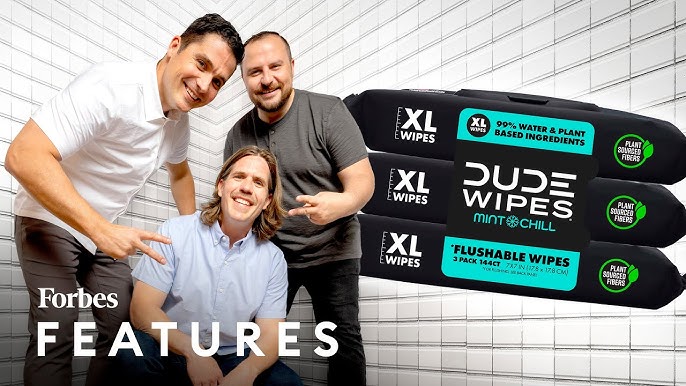
1. Dude Wipes Passes $1 Billion in Lifetime Sales
The largest number in this update belongs to Dude Wipes. On August 11, the company announced that it had surpassed $1 billion in lifetime sales. Then, in a Foundr Podcast episode released September 3, host Nathan Chan described the business as having generated close to $220 million in retail sales during 2024 with a team of just over 20 people.
Those numbers cannot be substituted for one another. Lifetime sales are cumulative across the company's history. Retail sales generally reflect what consumers paid at checkout, while Dude Products' revenue may instead reflect wholesale proceeds from retailers, depending on the channel and reporting method. Neither figure is a disclosed valuation. Because Dude Products is private, it does not publish the audited financial statements a public company would.
The Shark Tank Deal and the Verified Growth Trail
Sean Riley, Brian Wilkin, Ryan Meegan and Jeff Klimkowski appeared in Season 7, Episode 4 on October 16, 2015. They asked for $300,000 for 10%, after reporting about $300,000 in annual sales. Mark Cuban offered $300,000 for 25%, and the founders accepted. The site's dataset and later founder interviews agree on those terms.
The subsequent sales trail is unusually well documented for a private Shark Tank company. Forbes reported $70 million in 2022 revenue and $110 million in 2023. In the newer interview, Meegan said the business reached $40 million with only three people actively running it. CFO.com previously reported just under $50 million in 2021 revenue with four full-time employees—the original cofounders—plus extensive support from technology, consultants and third-party partners. The accounts describe slightly different points, but both show how far the business scaled before building a conventional staff.
Retail made that lean model much larger. Forbes reported that Dude Wipes secured a roughly $2 million Kroger order in 2015, entered a 1,500-store Walmart trial in 2018 and earned a permanent position in Walmart's toilet-paper aisle. In 2024, Walmart represented about 15% of Dude Products' revenue, retail represented approximately half, and Amazon remained the largest individual channel at 38%, according to Forbes. The company's August 2026 announcement now claims availability in more than 40,000 retail locations.
Outside Capital Finally Arrived
For years, Cuban's check was the only outside investment. That changed in June 2025, when TSG Consumer made a strategic growth investment. TSG said Riley, Klimkowski and Meegan would retain significant ownership stakes and continue leading the company, while Cuban would remain involved. Financial terms—including the investment amount and Dude Wipes' valuation—were not disclosed.
The next organizational step arrived in August 2026. Steve Winchell, formerly an innovation executive at The Honest Company and a 14-year Clorox veteran, became Dude Wipes' first Chief Product Officer and its first outside executive-level C-suite hire. His responsibilities include product development, research, quality and regulatory work. The milestone suggests Dude Wipes is adding specialized infrastructure after proving that a small founder team and outsourced model could carry the company through its earlier growth.
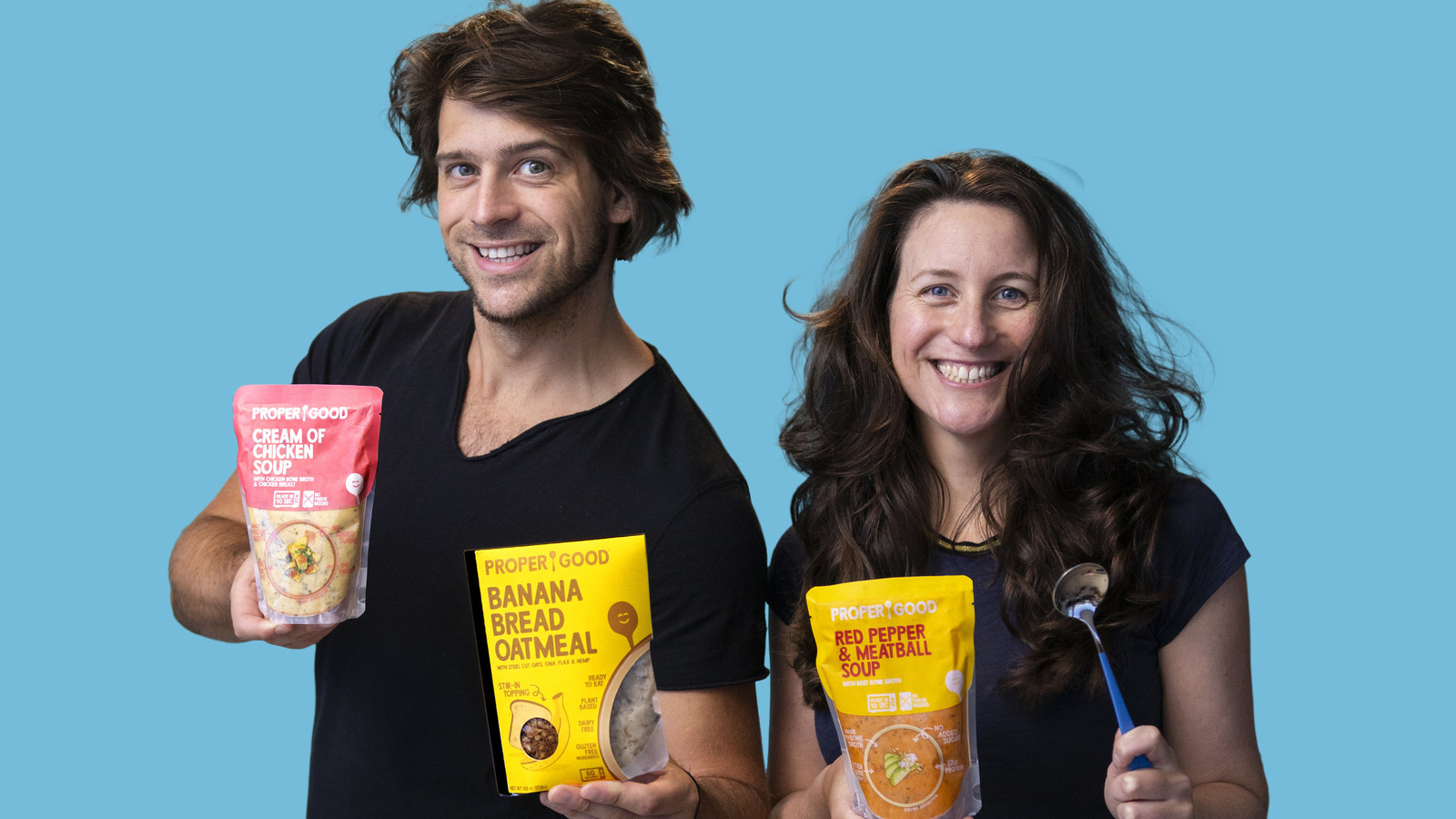
2. Why Proper Good Went Straight to Walmart
Proper Good's news is less about a fresh distribution announcement and more about a newly detailed strategy. In a September 8 Consumer VC interview, cofounder and CEO Christopher Jane explained why the shelf-stable meal company made Walmart its first major retail customer instead of building gradually through natural and specialty grocery stores.
The normal path for a better-for-you food startup is to begin with regional natural retailers, prove velocity and move toward larger chains. Jane's concern was that this route could lock Proper Good into premium pricing and a cost structure that worked for a niche audience but made mass-market scale harder. Proper Good had already used direct-to-consumer sales to test products and collect customer feedback. When it entered physical retail, it chose the retailer capable of immediately testing the mass-market proposition.
Walmart Was the First Retail Customer, Not the First Sales Channel
The distinction matters. Christopher and Jennifer Jane launched Proper Good online in April 2020. When they appeared on Shark Tank Season 13, Episode 2 on October 15, 2021, they asked for $400,000 for 10%. The business had generated $556,000 in its first partial calendar year and had crossed $1 million by the time of filming, but high customer-acquisition spending contributed to a reported monthly cash burn of about $80,000.
Mark Cuban offered $400,000 for 20%, and the siblings accepted on air. The site's company record notes that the formal arrangement was later renegotiated rather than closing exactly as televised, so the safest description is the documented on-air agreement. The episode still provided a major demand test: Jane has said Proper Good sold roughly three and a half months of its usual volume in the following week.
By the time Proper Good approached national retail, it was not an untested product concept. The company had direct purchasing data, reviews and repeat-customer behavior to inform which products belonged on shelves. Proper Good's own Walmart explanation said it initially launched six soups and four oatmeals in more than 2,000 stores. That was a much larger first retail move than the regional progression most young packaged-food brands attempt.
What Walmart Was Actually Betting On
Jane told Consumer VC that the Walmart buyer viewed shelf-stable soup as a category requiring a five-to-seven-year rebuilding effort rather than a quick product test. That framing changes the relationship. Proper Good was not simply trying to win temporary shelf space beside century-old canned brands; it was participating in a longer attempt to make the aisle relevant to younger shoppers and different eating occasions.
The economics also forced Proper Good to compete as an everyday meal rather than a premium health product. A direct-to-consumer order had a six-meal minimum because shipping individual shelf-stable pouches was inefficient. Walmart allowed a shopper to try one meal during an ordinary grocery trip. Proper Good said Walmart also worked with the company on shelf-ready packaging and pricing.
The current Walmart brand page confirms that the relationship has moved beyond the original soup-and-oatmeal launch. It now organizes Proper Good products across soup, pasta, overnight oats and mac and cheese, with multiple individual products listed for purchase. Online availability does not prove that every item is stocked in every physical store, but it does verify that the assortment has broadened substantially.
When “Healthy” Messaging Hurt In-Store Sales
One of Jane's most useful observations concerned messaging. Dietary and wellness claims that helped online shoppers choose among Proper Good's products could work against the brand in a physical soup aisle. Online, a shopper may deliberately filter for keto, plant-based, gluten-free or other attributes. In a mass retailer, prominent health language can make an unfamiliar meal feel specialized, restrictive or less focused on taste.
That does not mean the underlying product attributes disappeared. It means the front-of-pack hierarchy had to change. Proper Good had to communicate what the meal was and why it would taste satisfying before asking a shopper to process multiple dietary claims. This is an important difference between acquiring a high-intent customer online and earning a few seconds of attention in a crowded aisle.
3. Cabana Boys Opens the Door to Franchise Operators
Cabana Boys supplies the most forward-looking update. An official Cabana Boys Hospitality franchise page is now inviting prospective owner-operators to apply to launch the business in select new cities. The broader company site says Cabana Boys and its country-themed sibling brand, Cocktail CowBoys, have hosted more than 8,000 events across at least 10 cities. Those event and market totals are company-reported figures.
The company sells a combination of private-event bartending, party hosting and entertainment. Customers provide the alcohol; the company says Cabana Boys or Cocktail CowBoys provides licensed, insured and background-checked hosts who serve drinks, manage games and music, keep the party area organized and maintain the event's energy. The model began in Scottsdale and later expanded to destinations including Nashville, Austin, Miami, Palm Springs, Charleston and Savannah.
The Kendra Scott Deal Behind the Expansion Plan
Nelson Brooks appeared in Season 17, Episode 9 on January 14, 2026, asking for $225,000 for 10%. At pitch time, Cabana Boys reported $3.6 million in lifetime sales and $1.1 million in 2024 sales. Its most popular two-hour package cost $550 and carried a reported 57% profit margin, but the company lost $174,000 in 2024 after marketing spending failed to produce the expected return.
Kendra Scott had personally hired the service for a birthday event and offered $225,000 for 40%. Brooks negotiated the on-air agreement to $225,000 for 32%. In an August 2026 interview, he said he applied to Shark Tank after growth had plateaued and contracted—not while the company was at an effortless high point. He also described an ambition to build a franchised hospitality brand. That is a growth objective, not evidence that the company has a billion-dollar valuation or current revenue.
What the Franchise Page Does—and Does Not—Establish
The application is aimed at hands-on local operators. It asks candidates about business ownership, hospitality, hiring, sales, customer service, available funding, launch timing and willingness to enforce brand standards. The page explicitly says this is not a passive investment or side hustle and describes the franchises as owner-led businesses. That fits the central challenge of Cabana Boys: the service experience depends on recruiting and managing charismatic people consistently in every market.
However, the legal disclaimer is just as important as the application. Cabana Boys says the page is not an offer to sell a franchise, that no sale will occur without delivery of a Franchise Disclosure Document where required, and that it is not currently offering franchises in registration states. Submitting the form creates no franchise relationship. The public page does not state an initial franchise fee, total required investment, royalty rate or the number of signed franchisees.
The accurate update is therefore that Cabana Boys has built and publicly opened a franchise recruitment funnel. It is evidence of the company's intended expansion model, but not yet proof of completed franchise sales or successful franchise locations. Those become verifiable only when the company identifies signed operators, provides locations or discloses the relevant franchise documents and economics.
Three Companies, Three Different Scaling Problems
| Company | Scaling engine | What must work next |
|---|---|---|
| Dude Wipes | National retail, Amazon and outsourced operations | Add specialized leadership without losing the focused, lean model |
| Proper Good | Mass grocery distribution informed by direct-to-consumer testing | Win repeat purchases through taste, value and clear shelf communication |
| Cabana Boys | Potential local franchise owner-operators | Document attractive unit economics and reproduce service quality market by market |
Dude Wipes has already demonstrated enormous consumer reach and is now building the organization needed to support it. Proper Good is trying to modernize a mature grocery aisle by combining startup speed with the scale and price expectations of Walmart. Cabana Boys is earlier in the process, testing whether an event experience built around people and personality can be standardized without becoming generic.
That is why all three updates belong together. They are not simply optimistic company announcements. They illustrate the next constraint that appears after an idea works: Dude Wipes needs institutional depth, Proper Good needs mass-market shelf performance, and Cabana Boys needs local operators who can reproduce a human experience. The milestones are different, but each company is now confronting the harder question of whether its original advantage survives at greater scale.
Sources
- Mark Cuban Calls Us His Best Shark Tank Deal Ever ($200M+) - Foundr Podcast, September 3, 2026
- Dude Wipes Appoints Steve Winchell as First-Ever Chief Product Officer - company announcement via PR Newswire, August 11, 2026
- Dude Wipes Secures Strategic Growth Investment from TSG Consumer - TSG Consumer, June 23, 2025
- This Shark Tank Winner Has a $1 Billion Plan to Replace Toilet Paper - Forbes, May 17, 2024
- Making the Soup Aisle Cool Again with Chris Jane - Consumer VC, September 8, 2026
- Why Walmart? - Proper Good, accessed September 12, 2026
- Proper Good Brand Page - Walmart, accessed September 12, 2026
- Franchise Opportunities - Cabana Boys Hospitality, accessed September 12, 2026
- About Cabana Boys and Cocktail CowBoys - official company website, accessed September 12, 2026
- Shark Tank's Nelson Brooks on Building a Franchised Hospitality Brand - Elevate the Hustle, August 17, 2026
- Shark Tank Season 7 Episode 4, Season 13 Episode 2 and Season 17 Episode 9 - ABC; pitch and deal facts cross-checked against the site's Shark Tank dataset.