
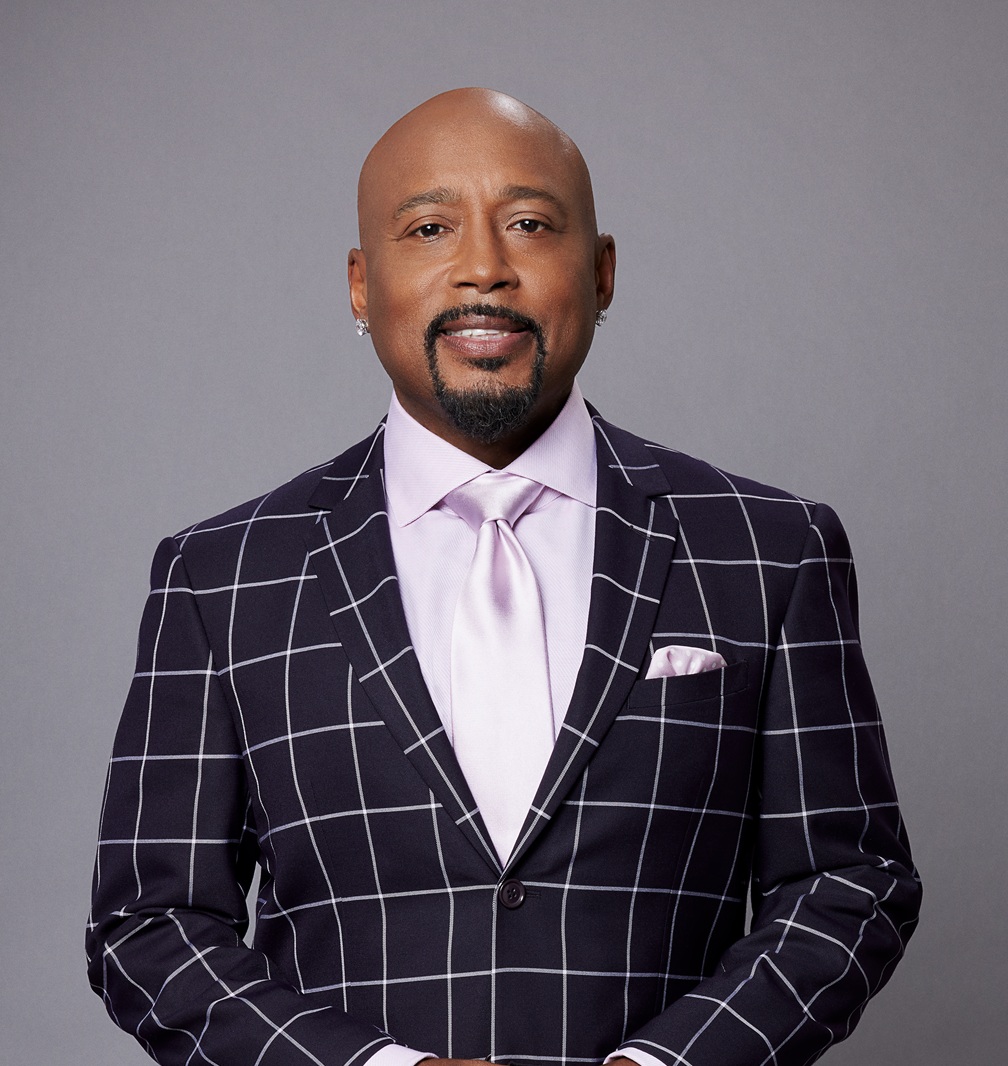
There is a moment Daymond John describes in his talks that perfectly captures who he is. It is 1992. He is sitting at a table in the family house in Hollis, Queens, teaching himself to sew. He is already working full-time as a waiter at Red Lobster — seven-day weeks, double shifts when they came — to keep the lights on. A business plan he wrote for a class came back with a failing grade. He had no investors, no connections in fashion, no formal training. Just a borrowed sewing machine, a kitchen table, and a belief stubborn enough to build an empire on. That empire would be called FUBU. It would eventually generate over $6 billion in global sales. And nearly two decades later, its founder would take a seat in the Shark Tank — Season 1, Episode 1 — and never look back.
Few entrepreneurs in American business have a story as authentically earned as Daymond John's. There is no inherited wealth here, no Silicon Valley funding rounds, no lucky pivot into a hot trend. What there is: grit, creativity, community, and a relentless hustle that transforms constraints into competitive advantages. His journey from FUBU's founding to bestselling author, from thyroid cancer survivor to Shark Tank icon, is one of the most compelling in modern entrepreneurship — and it starts, as all great Queens stories do, right on the block.
From Brooklyn to Hollis: The Making of a Hustler
Daymond Garfield John was born on February 23, 1969 in Brooklyn, New York, but Hollis, Queens is where his story truly begins. His family moved to the neighborhood when he was young, and Hollis would shape him in ways that still define his business philosophy today. This was a neighborhood that produced legends: LL Cool J grew up on 203rd Street, Run-DMC came out of the same zip code, Jam Master Jay was a local hero. The hip-hop culture that would eventually make FUBU famous was not just a market to Daymond John — it was his block, his world, his people.
John was raised primarily by his mother, Margot John, a woman whose belief in her son would later become the literal cornerstone of his business empire. Daymond's father left when he was young, and Margot raised him largely on her own. She worked hard, stretched every dollar, and — in the single most consequential business decision in FUBU history — would eventually mortgage their Hollis home to give her son a shot at his dream. That sacrifice would seed a multi-billion dollar brand.
School was complicated. Daymond was diagnosed with dyslexia, and traditional classroom learning never clicked the way the system needed it to. "I could not read very well," he has recalled in interviews. "But I had a memory like a steel trap. I could hear something once and remember it forever." Rather than letting the label define him, he adapted — memorizing, visualizing, listening — without yet knowing he was developing the exact cognitive flexibility that entrepreneurs need most. His learning difference became an engine, not an anchor.
What school could not teach him, the streets of Hollis did. At ten years old he was already selling pencils to classmates. His early relationship with sales — the pitch, the product, the close — began not in a boardroom but on the corner, learning what people actually want versus what they say they want. It was a masterclass in consumer psychology that no MBA program could replicate.
Sewing His Own Way: The Birth of FUBU
The FUBU origin story is entrepreneurship legend — but the details matter too much to skip. In 1992, Daymond recognized a gap in the market that mainstream fashion had either missed or actively ignored. The hip-hop and urban community wore their clothes as identity statements, as cultural declarations, as belonging markers. But the brands selling to them did not look like them, were not made by people who understood them, and shared none of their spirit. Daymond decided to fill that gap himself.
He started with hats — hockey-style caps that he sewed by hand, with the bold simplicity that would become FUBU's trademark. The name came naturally: For Us, By Us. Four words that were simultaneously a brand identity, a mission statement, and a market position unlike anything in the fashion industry at the time. He was not going after everyone. He was making something specific, for a specific community, with specific pride baked into every stitch.
The first day he sold hats on a street corner in Queens, he made $800. He reinvested every dollar, bought more fabric, made more hats, and did it again. Three childhood friends — Keith Perrin, J. Alexander "Ski" Martin, and Carl Brown — joined him, turning what started as a bedroom project into a crew with real momentum. They worked out of Daymond's mother's house, filling orders, sewing gear, and slowly building a brand that felt like the neighborhood because it was built by the neighborhood.
But scale required capital. And Daymond had none. His mother Margot made the move that changed everything: she took out a second mortgage on their Hollis home, generating $100,000 to fund FUBU's next stage of growth. It was not a small ask. It was her security, her equity, her safety net — all of it placed behind her son's sewing machine and her conviction that this was real. "I am not sure I would have done what my mother did," Daymond has said publicly. "She really put it all on the line for me."
The LL Cool J Moment That Changed Everything
Even with the funding in hand, FUBU needed a breakthrough — the kind that transforms a neighborhood brand into a national name. It arrived through LL Cool J, and it came with a stroke of marketing genius that belongs in any branding textbook.
LL Cool J was already one of the biggest names in hip-hop. He was also from Hollis, Queens — same neighborhood, same streets — and Daymond knew him. The proposition was straightforward: wear FUBU, let us provide the gear, and help show the world who we are. LL Cool J agreed. But the real magic came when he was filming a commercial for Samsung — a national advertising campaign with massive reach. In the ad, sporting a FUBU hat on camera, LL Cool J rapped the phrase "For Us, By Us" directly into millions of American living rooms. The brand's name. In a national Samsung commercial. For free.
The response was immediate. Retailers started calling. The phone rang off the hook. In 1993, FUBU attended the MAGIC apparel trade show in Las Vegas and walked out with $300,000 in pre-orders in a single day. "We almost had a heart attack," Daymond has recalled. The Samsung partnership was further extended into a formal international distribution arrangement, giving a small Queens brand a global infrastructure it could never have built independently. It was a masterclass in leveraging relationships: the right endorsement, placed brilliantly, doing more work than any advertising budget ever could.
Six Billion Reasons to Believe: FUBU Goes Global
Through the mid-to-late 1990s and into the early 2000s, FUBU became one of the most recognizable streetwear brands in the world. The timing was perfect: hip-hop had gone global, urban fashion was crossing into the mainstream, and FUBU was at the center of it all. At the brand's peak, it was generating approximately $350 million in annual revenue. Cumulative lifetime sales would eventually surpass $6 billion — a staggering figure for a brand born on a kitchen table in Queens with borrowed equipment and $100,000 from a mother's mortgage.
FUBU's global footprint stretched across licensing deals, marketing partnerships, and retail distribution in dozens of countries. The brand was more than a clothing line — it was a cultural statement, worn by artists, athletes, and everyday people who saw "For Us, By Us" as something that spoke directly to their experience. In a pre-social media era, that kind of organic cultural resonance was the entire ballgame. FUBU owned it.
Like many brands of its era, FUBU later navigated the challenge of evolving with the culture as the early 2000s brought shifts in music and fashion trends. But Daymond never stopped treating FUBU as a living entity. He has continued to steer the brand, pursue new collaborations, and find ways to keep "For Us, By Us" relevant in a landscape where authenticity — the exact quality the brand was founded on — matters more than it ever has. FUBU remains active today, with a legacy that no trend cycle can touch.
Taking a Seat in the Tank: Shark Tank's Original Shark
When ABC debuted Shark Tank in the summer of 2009, Daymond John was one of the five original sharks alongside Barbara Corcoran, Robert Herjavec, Kevin Harrington, and Kevin O'Leary. He was not a last-minute addition or a rotating guest — he was a founding cast member, and his uninterrupted presence since day one gives him something no later shark can claim: the full arc of the show's evolution, from a skeptical cable experiment to a genuine American institution watched by millions each week.
His enduring presence on the show makes complete sense when you understand his story. Daymond John did not arrive in the Tank as a tech billionaire or a finance wizard. He arrived as someone who had built a consumer brand from nothing, in a demographic that institutional investors routinely overlooked, with creativity and community as his primary tools. He understood the entrepreneurs sitting across from him in a way that went beyond business evaluation — he had been them, recently enough to remember what it felt like.
That empathy shapes his deal-making. Daymond gravitates toward consumer brands with strong cultural identities, founders with deeply personal connections to their products, and businesses that can thrive by owning a community rather than chasing the mass market. He has a particular eye for the kind of focused, authentic positioning that he lived firsthand with FUBU. His deal count is lower than some fellow Sharks, but his intentionality is higher. He does not invest for entertainment. He invests when he sees himself in the room.
The Crown Jewel: How Daymond Backed Bombas Into History
If FUBU is Daymond John's greatest creation, Bombas is his greatest investment. In Season 6, founders David Heath and Randy Goldberg walked into the Tank with a pitch for mission-driven performance socks built on a buy-one-give-one model: for every pair sold, one pair would be donated to a homeless shelter. They asked for $200,000 in exchange for 5% equity.
Daymond saw something the others may have underestimated: a brand with the kind of moral clarity and community purpose that turns customers into evangelists. He offered $200,000 for a 17.5% stake — more than triple the equity the founders wanted to give up. They pushed back. Daymond held firm. They took the deal.
What followed became one of the most remarkable post-Tank success stories in the show's history. The product — reinvented socks built with honeycomb arch support, blister-eliminating tabs, and seamless toes — was genuinely, measurably better than anything else in the category. The mission gave consumers a reason to pay more and feel good about it. And Daymond's mentorship helped the founders scale intelligently without losing what made the brand special. As of 2026, Bombas has donated over 100 million pairs of socks to those in need, generates approximately $250 million in annual revenue, and has surpassed $2 billion in cumulative lifetime sales — making it widely recognized as the most commercially successful investment in Shark Tank history.
Daymond has said the Bombas deal felt immediately familiar. "They had the heart, they had the mission, they had the product. That is all I needed to see." It was, in many ways, a replay of FUBU — a founder deeply connected to what they were selling, solving a real problem for a real community, with a point of view that could not be easily replicated by a competitor with more money and less soul.
Beyond Bombas: A Portfolio Built on Grit and Culture
Bombas is the headline, but Daymond's broader Shark Tank portfolio tells a consistent story. He bets on founders who remind him of himself: under-resourced, over-motivated, and building something for a community that has not been served well enough yet.
A selection of standout investments across his tenure on the show:
Bubba's Q Boneless BBQ Ribs — Former NFL defensive lineman Al "Bubba" Baker invented a technique for removing bones from baby back ribs before cooking, creating a mess-free product the whole family could eat. Daymond invested and helped Bubba navigate from home invention to retail distribution — a self-made person with a brilliant, simple idea and no roadmap for getting it to market. (The post-Tank relationship later became legally contentious; the full story is told in our deep dive on Shark Tank deals that fell apart after filming.)
Spergo — In Season 13, sixteen-year-old Trey Brown pitched his streetwear brand SPERGO, which he had started at age twelve with $178 of birthday money. Daymond offered $300,000 for 20%, calling it one of the most moving pitches he had ever witnessed. The capital was real, but the mentorship was priceless — Daymond saw his own origin story reflected back at him from a kid who hadn't even graduated high school yet.
Spikeball — The portable outdoor net game that had already built a grassroots tournament community before its Season 6 pitch. Daymond recognized a brand with its own culture already forming — exactly the kind of authentic community energy that drives long-term consumer loyalty. Spikeball has since grown into one of the most widely played backyard and collegiate recreational sports in the country.
Browndages — The Season 13 pitch that perhaps best captures what "For Us, By Us" looks like in practice: adhesive bandages engineered to match darker skin tones. An everyday product the mainstream market had simply never made for a huge portion of the population. Founders Intisar Bashir and Rashid Mahdi walked out with a three-way deal between Daymond, Mark Cuban, and Lori Greiner — all three sharks recognizing in Browndages the same underserved-community instinct that created FUBU three decades earlier.
His filtering process has remained consistent across hundreds of pitches: authentic founder passion, a genuine problem being solved, and a product with a community built into its DNA. "I don't invest in products," he has said more times than he can count. "I invest in people."
The Power of Broke: Constraints as Superpowers
In 2016, Daymond published The Power of Broke: How Empty Pockets, a Tight Budget, and a Hunger for Success Can Become Your Greatest Competitive Advantage. The title is not motivational hyperbole — it is the central operating thesis of his entire business life, distilled from more than two decades of working with what he had rather than waiting for what he wished he had.
The core insight is deceptively simple: entrepreneurs with abundant resources spend their way through problems. Entrepreneurs with limited resources have to think their way through them. Scarcity forces creativity. It forces prioritization. It forces founders to know — from day one — whether their idea is actually good, because they cannot afford to waste a dollar testing theories. The constraint is not a handicap. It is a filter that eliminates bad ideas early and hones good ones fast.
Daymond tested this philosophy on himself first. FUBU was built without venture capital, without industry connections, and without a business degree. Every dollar had a job. Every partnership had to count. That discipline — the necessity thinking that broke forces on you — created efficiencies and creative leaps that well-funded competitors simply could not replicate. "I had a $40 budget," he has said. "So I had to figure out how to use $40 better than someone with $40,000. That is the power of broke."
The book became a business bestseller and a staple recommendation in entrepreneurship communities worldwide. It was followed by Rise and Grind (2018), which explored how disciplined morning routines and daily habits drive entrepreneurial performance — a subject Daymond lives personally, routinely waking before 5 a.m. to get ahead of his day. His published catalog also includes Display of Power (2007), The Brand Within (2010), and Little Daymond Learns to Earn, a children's book designed to plant entrepreneurial thinking in young minds — starting, as Daymond himself did, from the very beginning.
Turning Obstacles Into Assets: Dyslexia, Cancer, and Coming Back Stronger
There is no sanitized version of Daymond John's story. He talks openly about his obstacles — not for sympathy, but because he genuinely believes they are the source of his greatest strengths.
The dyslexia shaped him in more ways than most people realize. Growing up unable to read fluently in a system that measured intelligence through reading proficiency sent a message that Daymond refused to internalize. He compensated by developing extraordinary memory, visual-spatial intelligence, and a deeply instinctive ability to read people. Decades of having to interpret rooms instead of textbooks honed a kind of emotional and situational awareness that no formal education could have provided. As an adult, he has come to view his dyslexia not as a limitation but as a different operating system. "Some of the greatest entrepreneurs I know have dyslexia," he has said. "It is not a coincidence. It forces you to see the world differently."
The more recent challenge was a thyroid cancer diagnosis in 2017. It was caught early — in part because of regular medical checkups that Daymond now credits with saving his life — and successfully treated. The experience shook him, but it also sharpened him. He became a vocal advocate for men's health, early medical screening, and proactive healthcare, particularly in communities where preventive care has historically been underutilized. "You have to take care of your body if you want to keep grinding," he said in a widely shared interview after the diagnosis. "You are no good to anyone if you are not here."
In both cases — the dyslexia and the cancer — the Daymond John response was identical: learn from it, adapt to it, and use it as motivation. Not Instagram affirmations. Not motivational spin. Just the same philosophy he picked up on the corners of Hollis as a kid: you work with what you have, and you make it count.
The Personal Side: Family, Purpose, and Life Beyond the Tank
For someone who has spent fifteen-plus years as one of the most recognizable faces on American television, Daymond John keeps his personal life remarkably grounded. He has three daughters — Yasmeen, Destiny, and Minka — and is deeply hands-on as a father. He frequently credits his daughters as the most important project he manages, and it shows in his public prioritization of their time over almost anything else on the schedule.
In October 2018, he married Heather Taras, his long-time partner, in an intimate private ceremony. Heather has been a consistent presence in his professional life as well, and the relationship reflects the same collaborative, trust-first model that has defined his best business partnerships.
His mother Margot, who mortgaged her home to fund FUBU more than three decades ago, remains a central figure in his storytelling. Whenever Daymond talks about what the Power of Broke means in practice, Margot's sacrifice is the example he reaches for first. She did not just give him money — she gave him the belief that his vision was worth betting everything on. That is a gift that no return on investment can fully measure.
Beyond family, Daymond operates through The Sharks Group, which manages his investments, brand relationships, and consulting work. He remains one of the most sought-after speakers on entrepreneurship, branding, and culture on the global circuit — bringing the same directness and street-level pragmatism to keynote stages that he brings to Shark Tank pitches.
Rise and Grind: Daymond John in 2026
As of early 2026, Daymond John shows no signs of pulling back. He continues as a core Shark on Shark Tank Season 17, which premiered on its new Wednesday night schedule in September 2025, and his deal-making remains as deliberate and culturally tuned-in as ever. In a season featuring a new generation of founders — many of them inspired by entrepreneurs they watched on this very show growing up — his institutional memory and founder empathy are arguably the most valuable assets he has ever brought to that chair.
FUBU remains active as a global brand, and Daymond has continued to explore collaborations and activations that bring "For Us, By Us" to new audiences without compromising what made the brand mean something in the first place. In an era when authenticity is the single most valuable asset in consumer marketing, a brand with over thirty years of earned credibility in the culture carries a different kind of weight than anything a marketing agency can manufacture.
His net worth is estimated at approximately $350 million as of 2026 — a figure reflecting FUBU's legacy, Shark Tank returns, real estate, speaking fees, and his investment portfolio. But in most interviews, he visibly bristles when the conversation reduces his story to a number. The number is the consequence. The story, as he sees it, is the thing worth talking about.
The Legacy: What "For Us, By Us" Really Means
It would be easy to frame Daymond John's legacy as a fashion story — FUBU, hip-hop, urban culture, $6 billion in sales. That narrative writes itself and it is not wrong. But it undersells what he has actually built.
What Daymond really constructed — through FUBU, through Shark Tank, through the Power of Broke philosophy, through every Spergo-level mentorship moment and every Bombas-level investment — is a comprehensive, lived case study in what happens when someone from the wrong neighborhood, with the wrong diagnosis, and with no institutional support decides to build anyway. He did not wait for permission. He did not wait for a check from the right people. He did not wait for someone who looked like him to show him the door was open. He built the door. From scratch. With a kitchen table, a sewing machine, and a mother who believed.
For entrepreneurs who come from communities that venture capital overlooked — for founders who don't have the right school on their resume or the right zip code or the right coffee with the right person — Daymond John represents something beyond inspiration. He represents proof. Genuine, documented, $6 billion proof that the Power of Broke is not a slogan. It is a strategy. And in the hands of the right person, it works spectacularly well.
He started with a sewing machine and a kitchen table. Thirty-plus years later, his seat in the Shark Tank is the one the others benchmark themselves against. That is not a coincidence. That is a career.
Want to explore how the other original Sharks built their empires? Read our profiles on Lori Greiner's journey from a single earring organizer to retail royalty, Robert Herjavec's rise from immigrant to cybersecurity titan, and Mark Cuban's complete 263-deal Shark Tank legacy.
Sources
This profile was researched and compiled from multiple sources, including: Daymond John, The Power of Broke (Crown Business, 2016) and Rise and Grind (Currency, 2018); Inc. Magazine profiles and entrepreneur interviews; Forbes business coverage and net worth reporting; Bombas official impact and donation reporting; and ABC's Shark Tank season records (Seasons 1–17).


