
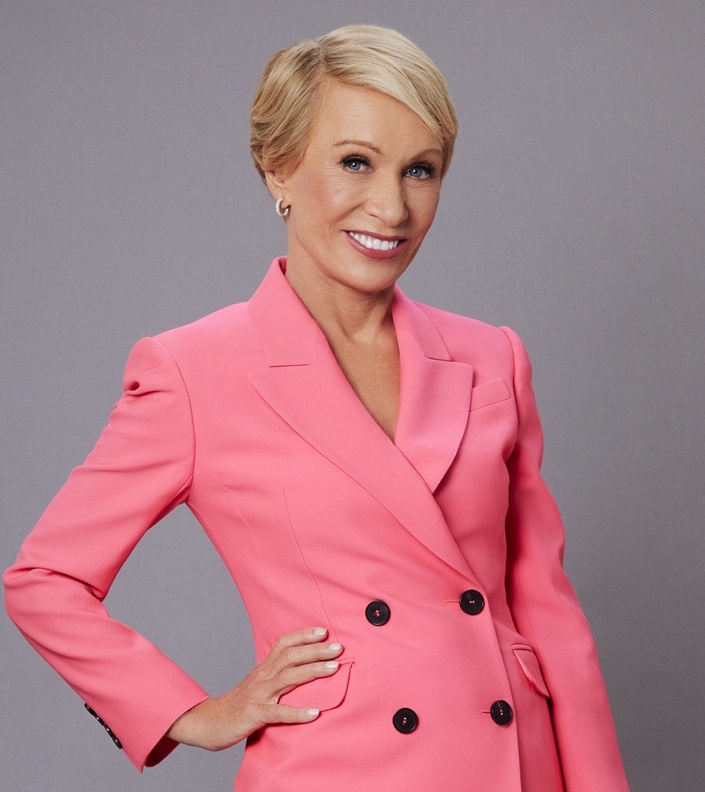
There is a scene from Season 4 of Shark Tank that explains Barbara Corcoran better than any highlight reel could. Two cousins from Maine — Jim Tselikis and Sabin Lomac — walked into the Tank asking for $55,000 for 5% equity in a food truck that sold lobster rolls. Every number in the pitch was thin. The valuation was $1.1 million for a truck. The unit economics were unproven at scale. The business plan had the kind of gaps that usually send Sharks for the door. But Barbara watched the two cousins talk about their grandmother, their summers in Maine, their obsession with sharing something real with the world — and she wrote the check. She gave them the $55,000 they asked for, took 15% instead of 5%, and walked away with one of the best investments in Shark Tank history. Cousins Maine Lobster has since grown to over $39 million in annual revenue and more than 60 franchise locations across the country. That deal was not an accident. It is the purest expression of how Barbara Corcoran invests: she bets the jockey, not the horse.
Over 17 seasons and more than 140 deals on Shark Tank, Barbara Corcoran has become the show's most consistent and arguably most human presence. She is not the richest Shark in the room. She is not the loudest. She does not deal in royalties or take equity positions in hundred-million-dollar valuations. What she does, better than anyone else in that tank, is read a person — their energy, their conviction, their willingness to be pushed — and decide in about ninety seconds whether they have what it takes. More often than not, she is right.
Growing Up One of Ten: Edgewater, New Jersey
Barbara Ann Corcoran was born on March 10, 1949, in Edgewater, New Jersey, the second of ten children. Her parents raised all ten kids in a two-bedroom apartment — a space that most families today would use for two people. Her father, Edwin Corcoran, worked as a printing plant foreman. Her mother, Florence, managed the household with the kind of organized chaos that only a parent of ten could master.
Growing up in that house shaped Barbara in ways she still talks about. Ten kids in two bedrooms means you learn early that resources are not guaranteed and attention has to be earned. You learn to be loud when it matters, patient when it doesn't, and quick to read a room — because in a house that crowded, reading the room is a survival skill. You also learn that love and support can exist even when money is scarce. Those lessons would become the architecture of her entire career.
School was a problem. Barbara has spoken openly and consistently about her struggles with dyslexia, a learning difference that went undiagnosed through most of her childhood. She graduated near the bottom of her high school class. Teachers who saw the grades did not see the sharply perceptive mind behind them. She was labeled a poor student, a slow reader, a kid who would not amount to much — and she held on to every one of those assessments as fuel.
"I was told I would never be good at anything because I wasn't good at reading," she has recalled in interviews. She went to college — St. Thomas Aquinas College in New York — but graduated without a plan. What followed were 20 different jobs in 20 different fields: waitress, cashier, receptionist, diner hostess, model. None of them were dead ends. All of them were an education.
The $1,000 Loan That Started Everything
In 1973, Barbara was working as a receptionist at a real estate office in New York City. She was 23 years old, making $135 a week, living paycheck to paycheck. Her boyfriend at the time — Ramon Simone, a man she calls Ray — lent her $1,000 and suggested they go into business together. The two of them founded Corcoran-Simone, a small real estate firm operating out of little more than a phone and a lot of nerve.
Seven years later, Ray left her for her secretary. Before he walked out the door, he told her she would never succeed without him. "He told me I was nothing without him," Barbara has said. "That was the best thing he ever did for me." She kept the company, renamed it The Corcoran Group, and used his prediction as a motivational wall she spent the next 28 years staring at.
The Corcoran Group grew steadily through the 1980s and 1990s, becoming one of New York City's most recognizable luxury real estate brands. Barbara built the business with an instinct for marketing that was ahead of its time. In 1997, she published "The Corcoran Report" — a survey of Manhattan real estate prices that she distributed to media contacts and journalists. It was not a formal study. It was a promotional tool disguised as industry data. The press picked it up. Suddenly Barbara Corcoran was a real estate authority, not just a broker. She understood something most business owners do not: the story a company tells about itself is as powerful as any product it sells.
Selling The Corcoran Group for $66 Million
By 2001, The Corcoran Group had grown into one of the top residential real estate brokerages in New York City, with hundreds of agents and a brand that dominated the luxury market. That year, Barbara sold the company to NRT Incorporated — a subsidiary of Cendant Corporation — for $66 million.
It is worth pausing on the math. She started with a $1,000 loan. She sold for $66 million. That is a 66,000-to-one return on the original capital — achieved without venture funding, without a co-founder who stayed, and without the kind of tailwind that came from tech or a hot IPO market. She built it through relationships, hustle, and an uncanny ability to hire people who were better than her at the tasks she couldn't do herself.
She wrote about the experience in her 2003 book, Use What You've Got and Other Business Lessons I Learned from My Mom, which laid out the same philosophy she would later carry into the Shark Tank: your biggest professional assets are often the things people tried to make you ashamed of.
Taking the Shark Tank Chair: Season 1, Episode 1
When Shark Tank launched in 2009, Barbara Corcoran was one of the five original Sharks alongside Kevin O'Leary, Robert Herjavec, Daymond John, and Kevin Harrington. In the very first episode, she invested in Ava The Elephant — a medicine dispenser for children — taking 55% equity for $50,000. That deal reflected both the era and Barbara's instinct: the terms were sky-high by today's standards, but she backed a first-time inventor with a product that solved a real problem for parents.
She was briefly replaced for Season 2 by Lori Greiner, then brought back permanently from Season 3 onward. Since then she has appeared in every season of the show — all 17 — and has accumulated more individual deals than any other shark in the database. By Season 17, her total deal count stands at more than 140 investments across the show's run.
What she brought to the Tank from the start was something none of the other Sharks had in quite the same form: the experience of building a company from nothing with no outside capital and no safety net. Mark Cuban had early exits that gave him financial cushion. Robert Herjavec had a successful tech sale behind him. Barbara walked into Season 1 as someone who had scraped and pitched and fought for every dollar over 28 years. That biography changes how you look at a nervous founder standing in front of you.
The Corcoran Philosophy: Bet the Jockey, Not the Horse
Ask any entrepreneur who has watched Shark Tank carefully and they will tell you: Barbara asks different questions than the other Sharks. While Kevin O'Leary is running the royalty math and Lori Greiner is assessing retail shelf placement potential, Barbara is usually quiet, watching the founder. She wants to see what happens when the numbers get challenged. Does this person collapse or push back? Are they defensive, or are they listening? Do they love their product or do they love the idea of being an entrepreneur? The answers to those questions often outweigh anything on the term sheet.
Her stated heuristic is simple and consistent: she invests in people who have overcome something. Not just worked hard — overcome. A setback that would have stopped most people, a background that did not set them up to succeed, a rejection that would have sent a weaker founder home. She has described backing founders who remind her of herself at 23: broke, told they couldn't do it, doing it anyway. That pattern shows up in deal after deal if you look at the data closely enough.
This creates a portfolio that looks different from other Sharks' books. Barbara's deals tend to be smaller check sizes — she has written checks as small as $25,000 — with higher equity positions in early-stage companies. She takes on more risk per deal and spreads it across more companies. Her biggest losses come from companies that had compelling founders but product-market fit that never materialized. Her biggest wins come from bets that looked too early to everyone else in the room.
Three Deals That Define Her Style
Cousins Maine Lobster (Season 4) — The clearest expression of the jockey thesis. Jim Tselikis and Sabin Lomac asked for $55,000 for 5% equity in what was essentially a food truck concept built on nostalgia and family pride. Barbara closed at $55,000 for 15%. The company scaled to over 60 franchise locations and crossed $39 million in annual revenue. Barbara has cited it as one of the first times she consciously prioritized the founders' energy over the business plan — the plan was thin, but the people were not.
Grace & Lace (Season 5) — Melissa Hinnant walked into the Tank with a boutique lace sock and boot accessory brand she had built while dealing with the premature birth and death of her daughter. The deal: $87,500 for 10% — the lowest dollar amount ever offered for 10% equity at that point in the show's history, which told you something about how Barbara valued the company. Grace & Lace has since grown to over $47 million in lifetime revenue. The founder's resilience — not her business plan — was what Barbara was investing in.
The Original Comfy (Season 9) — Brothers Brian and Michael Speciale pitched a giant, wearable blanket-hoodie hybrid and asked for $50,000 for 20% equity. Barbara offered $50,000 for 30% — a higher equity grab on an intentionally tiny check. The Comfy became one of the top-selling items in QVC history and generated $10-15 million in tracked revenue, with enormous holiday sales spikes. Barbara's instinct — that the product had a mass-market emotional appeal the other Sharks were too rational to see — was correct.
Those three deals tell the same story: small check, high conviction, back the person before the plan. It is not a formula built on financial engineering. It is a formula built on having been in the room when no one believed in you, and recognizing that look on someone else's face.
The Underdog Pattern Running Through Her Portfolio
Look at Barbara's broader deal history across 17 seasons and a pattern emerges that is hard to explain purely through investment logic. She disproportionately backs women founders — her deal history tilts female at a rate higher than any other Shark. She disproportionately backs food and beverage companies, a category most investors avoid because margins are low and competition is brutal. She backs niche seasonal businesses like Bauble Stockings and The Christmas Carolers that other Sharks laugh at. And she backs companies with stories rooted in personal loss or hardship.
Other notable portfolio performers include Fresh Patch (real-grass dog bathroom pads, now $10 million in annual revenue), Slumber Pod (portable blackout sleep pods for babies, $400,000 for 20%, now $10 million revenue), and Pipsnacks (heirloom popcorn, $200,000 for 10%, now $12 million revenue). Across the portfolio, the thread is the same: founders who built something real out of limited means and backed themselves when the market hadn't decided to yet.
Not all of her bets land — Barbara has also accumulated some of the show's most prominent deal failures, including companies that struggled after filming and investments that never materialized out of production. She has been transparent about this. The underdogs she backs sometimes fail because the obstacles that forged them also limit their runway. A different kind of investor would filter those pitches out. Barbara argues that filtering them out would also mean filtering out the Cousins Maine Lobsters and the Grace & Laces.
Season 17: Still the Most Active Shark in the Building
In Season 17, which began airing in September 2025 on its new Wednesday night time slot, Barbara closed six deals across the first eleven episodes — one of the most active runs of any Shark in the season. Her investments included the Repaint Tray (a paint tray system for home contractors), Fundraiser Blankets (a school fundraising company already generating over $10 million annually), Matzoh Ball Ramen (a Jewish-Asian fusion food brand), Bauble Stockings, The Christmas Carolers, and SOMNIA+.
The breadth of those investments is almost intentionally unfashionable. A paint tray. Christmas carolers for hire. Matzoh ball ramen. None of these are the kind of category-defining bets that generate press releases. All of them fit the Corcoran model: founders with something to prove, products that serve a specific community, businesses that can grow quietly without needing to be unicorns. In an era when every other part of the venture capital world is chasing AI and platform businesses, Barbara Corcoran is writing $200,000 checks to people who make things people need and love.
She remains one of the few Sharks who has appeared in all 17 seasons without a significant pause. The show's move to Wednesday nights — covered in depth across the Season 17 viewership analysis — came with concerns about whether the new slot would affect deal quality. Barbara's Season 17 portfolio suggests she has not changed how she operates regardless of the schedule.
The Personal Side: Life After the $1,000 Loan
Barbara married Bill Higgins, a former FBI agent, in 1988. They have two children together: a son, Tom, and a daughter, Kate, adopted as an infant. Barbara has spoken openly about the challenges of adoption — navigating the process while running a growing business — and about trying to parent in a way that is different from the scarcity-defined household she grew up in while still instilling the same hunger for work.
Her public persona — warm, sharp, occasionally theatrical — is not a performance. Former entrepreneurs who have worked with her describe the same person off-camera: direct, accessible, genuinely invested in the people she backs. She returns calls. She shows up to events for companies she has invested in. She gives the kind of hands-on attention that, in a business culture full of passive investors, is genuinely unusual.
With an estimated net worth of $100 million, Barbara's wealth is notably more modest than her co-stars — Mark Cuban at $5.4 billion, Kevin O'Leary reportedly north of $400 million. She has addressed this directly and without apology. The Corcoran Group was the vehicle that created her wealth, not venture capital, and her Shark Tank portfolio is built on smaller bets that compound over time rather than moonshots that pay out in exits.
She has written two books — Use What You've Got and Shark Tales — appears regularly as a motivational speaker, and has become one of the more sought-after voices on the subject of entrepreneurship and resilience. She ran a podcast ("Business Unusual with Barbara Corcoran") that consistently ranked among the top business podcasts during its run, built around the kind of practical, no-jargon advice she is known for giving on the show.
What Barbara Corcoran Actually Built
There is a version of Barbara Corcoran's career that looks less impressive on paper than the careers of the Sharks sitting next to her. Smaller net worth. No billion-dollar exits from Shark Tank. No single investment that defined the way a market moved. By the pure metrics of venture performance, she is not the most decorated Shark in the Tank.
But that framing misses what she actually built. She took a $1,000 loan, outlasted the boyfriend who bet against her, built a company for 28 years without outside capital, sold it for $66 million, then spent the next 17 years on national television backing founders the market underestimated. She has supported more women-owned businesses through Shark Tank than any other investor on the panel. She has backed more food and beverage entrepreneurs — a notoriously difficult category — than anyone else in the room. And she has told, consistently and publicly, a story about entrepreneurship that centers grit and people rather than pitch decks and valuations.
Of all the profiles in the Shark Tank investor canon, Barbara Corcoran's is the one that most closely mirrors the experience of the founders walking through that door. She did not start with advantages. She did not have a network that opened doors. What she had was a willingness to bet on herself when no one else would — and after 17 seasons, she is still extending that same wager to everyone else who walks into the Tank convinced that what they have built is worth more than the world has given them credit for.
Sources
- Shark Tank Season 1–17 broadcast records and deal data (ABC / our database)
- Barbara Corcoran, Use What You've Got (Portfolio/Penguin, 2003)
- Barbara Corcoran, Shark Tales (Portfolio/Penguin, 2011)
- The Corcoran Group sale to NRT Inc., reported broadly, 2001
- Cousins Maine Lobster — cousinsmainelobster.com
- Grace & Lace — grace-lace.com
- Forbes, Inc., and Entrepreneur profiles of Barbara Corcoran, 2020–2025


